This ruling comes at a time when thousands of women crack the highly competitive NEET PG every year but often face tough choices between career and family. Let’s break down what happened, why it matters and what it means for future women doctors across India.
The Case in a Nutshell
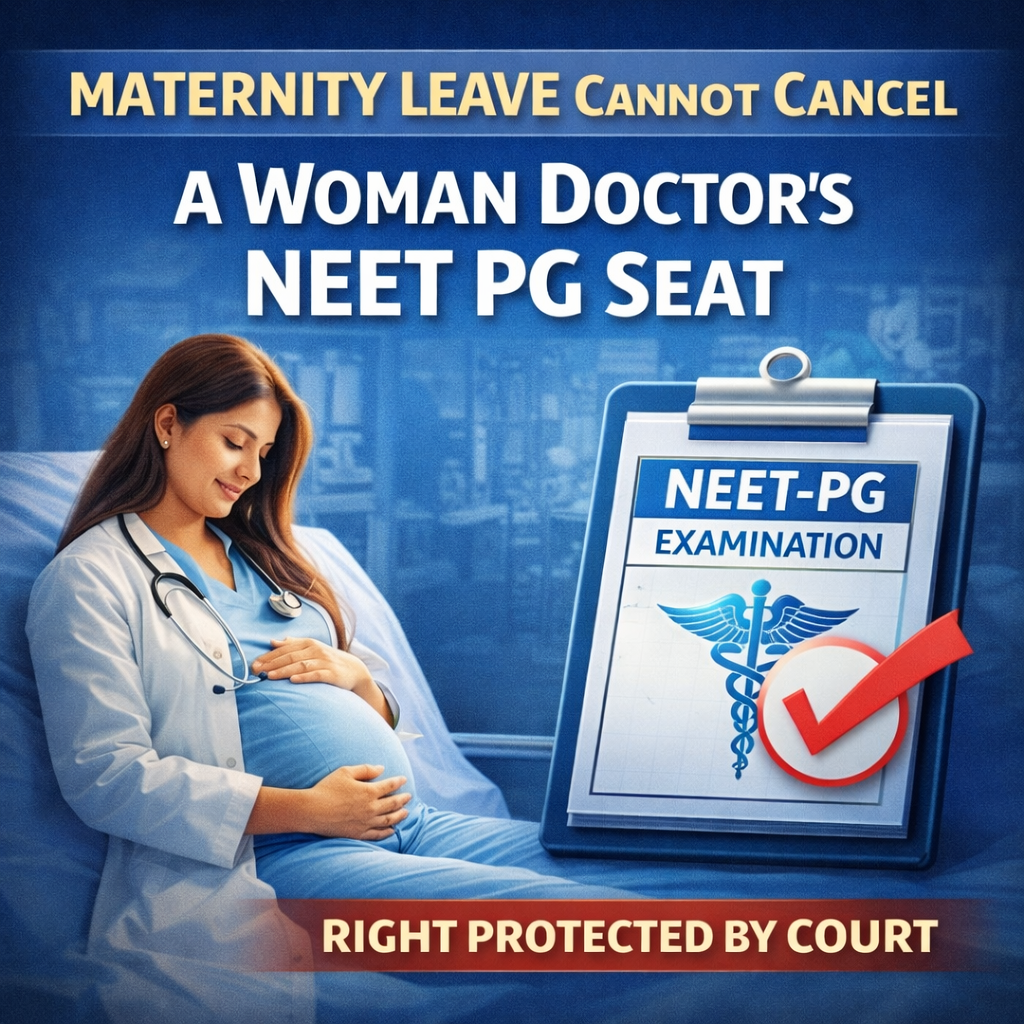
A woman doctor successfully cleared NEET PG 2026 and was allotted a seat in the Post MBBS Diploma in Ophthalmology at S.K. Medical College and Hospital, Rajasthan. However, she was already on officially sanctioned maternity leave granted from 21 January 2026 to 19 July 2026 by the Chief Medical Officer, Kudan (Sikar).
During this period she gave birth and was in the crucial postnatal recovery phase. The state counselling authorities had set 9 April 2026 as the last date for joining the allotted college. When she requested an extension due to her health and maternity needs, request was rejected.
She approached the Rajasthan High Court seeking protection. In a balanced and empathetic order, Justice Anuroop Singhi ruled that she can formally submit her joining documents to the college while continuing her full maternity leave without any break or penalty. The court also restrained the state from taking any coercive or adverse action meaning her seat cannot be cancelled.
The matter has been posted for further hearing on 29 April 2026, giving the state time to file its reply.
Why This Judgment Is a Game Changer
This is not just about one doctor it sends a powerful message to medical education authorities across India:
- Maternity is a right, not a punishment. The Maternity Benefit Act, 1961 (amended in 2017) guarantees women employees 26 weeks of paid maternity leave. Doctors in government or contractual roles are entitled to the same protection.
- PG medical seats are not “use it or lose it” traps. Rigid deadlines cannot override fundamental rights under Article 21 (right to life and dignity) and Article 14 (equality before law).
- Work-life balance in medicine is finally getting judicial recognition. Women make up nearly 50% of MBBS graduates today, yet many drop out or delay PG training due to pregnancy and childcare. This ruling removes one major barrier.
The court’s order is crystal clear:
“The petitioner may submit her joining before respondent No. 5 S.K. Medical College and Hospital for her Post MBBS Diploma in Ophthalmology. She would be entitled to continue with her said maternity leave for the period already granted… and the respondents are restrained from taking any coercive or adverse action against the petitioner.”
Bigger Picture: Challenges Faced by Women Doctors in India
Women doctors in India often walk a tightrope. Long MBBS hours, mandatory rural postings, competitive NEET PG exams, and then the biological clock all collide in the 25–35 age bracket. Many choose between:
- Delaying marriage or childbirth
- Opting for shorter diploma courses instead of MD/MS
- Taking career breaks that hurt future promotions
Previous judgments have also supported women’s rights:
- Kerala High Court rulings protecting maternity leave during house surgency
- Supreme Court observations on not wasting medical seats while upholding constitutional rights
This Rajasthan HC order joins that progressive line and sets a strong precedent for other states.
What This Means for Aspiring Women Doctors (NEET PG 2026 & Beyond)
If you are a woman preparing for or have cleared NEET PG:
- Document everything—Keep copies of your maternity leave sanction order, medical certificates and communication with authorities.
- Know your rights—Maternity leave is protected. You can approach the High Court if counselling bodies act unreasonably.
- Plan smartly — Choose colleges and specialities that offer better work life balance (Ophthalmology as in this case, is often considered more manageable).
- Join support networks — Groups like Women Doctors Forum and medical women’s associations provide guidance on maternity during PG training.
A Message to Medical Education Regulators
The National Medical Commission (NMC) and state counselling committees should take note. Uniform guidelines on maternity leave during PG admission and training are urgently needed. Deadlines can be made flexible for genuine cases without compromising seat utilisation.Medical seats are national resources but so are the doctors who occupy them especially mothers who balance healing others while nurturing the next generation.
Final Thoughts
The Rajasthan High Court’s intervention is a victory not just for one doctor but for every woman who dreams of becoming a specialist while embracing motherhood. It proves that the judiciary understands that compassion and competence can coexist.
As more women enter postgraduate medical education, such rulings will become the norm rather than the exception. Until then, this judgment stands as a beacon of hope and equality.
What do you think? Should medical colleges have mandatory maternity support policies during PG training? Share your views in the comments below!
Have you faced similar challenges during NEET PG counselling or PG training? Drop your story let’s start a conversation that helps the next generation of women doctors.