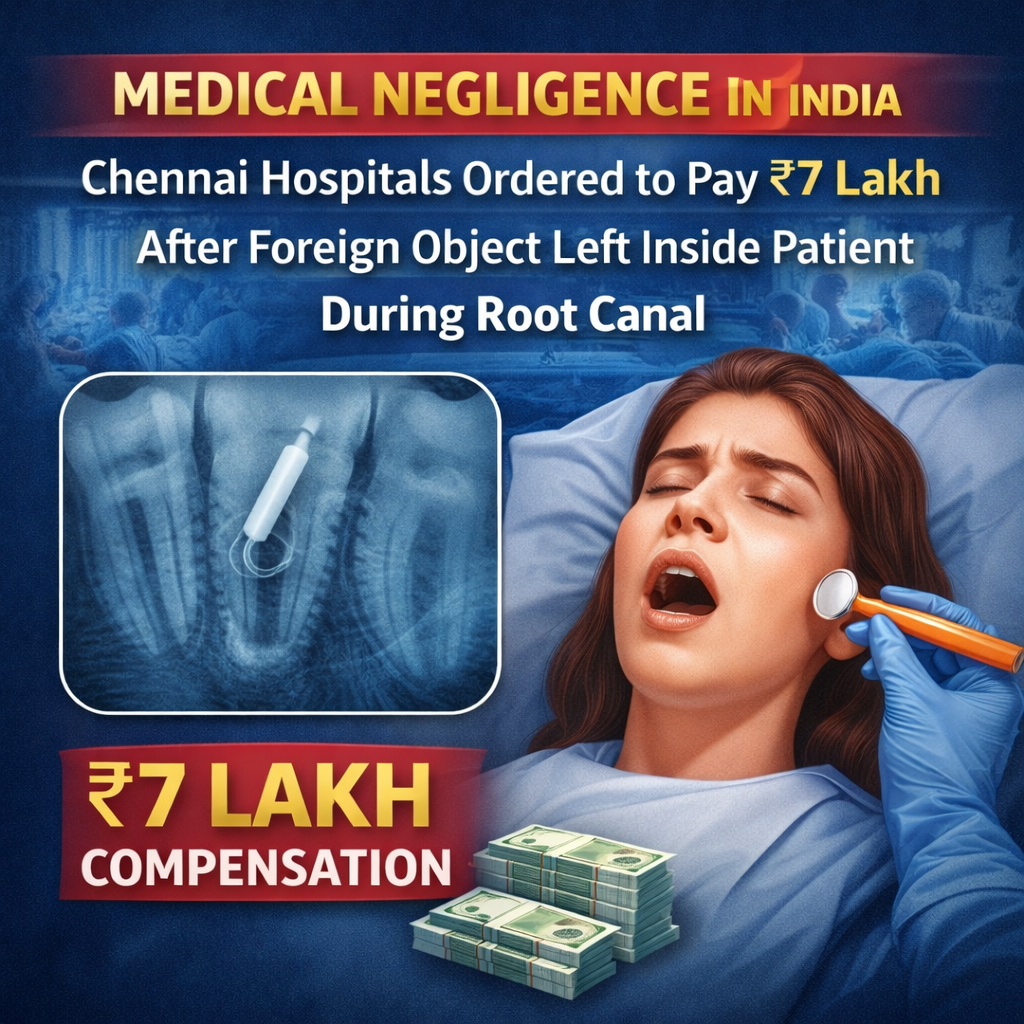
Case involves a sharp dental instrument that accidentally entered a patient’s digestive tract during a routine root canal procedure, followed by an endoscopic intervention performed without proper consent.
This incident which occurred in August 2025 has sparked widespread discussion about medical standards, especially in dental and surgical procedures. As someone who follows healthcare news closely, I believe cases like this serve as powerful reminders for both patients and medical professionals. Let’s break down what happened, why the court ruled the way it did and what every patient in India should know to protect themselves.
What Happened in This Chennai Medical Negligence Case?
According to the complaint filed by the patient’s wife, her husband underwent a root canal treatment at Saveetha Dental College Hospital in Chennai. During the procedure, a sharp dental instrument slipped into the patient’s digestive tract. The primary reason cited was the failure to use a rubber dam a basic safety tool that dentists routinely employ to isolate the tooth and prevent instruments or debris from being swallowed or inhaled.
Instead of a straightforward dental visit, the patient faced severe complications, mental trauma, and additional medical expenses. To retrieve the foreign object, he was then taken to Saveetha Medical College Hospital for an endoscopic procedure. However, the commission found that this second intervention was also carried out without obtaining valid informed consent from the patient or his family.
The hospitals reportedly failed to provide complete medical records despite repeated requests which further weakened their defense. The consumer court ultimately applied the legal principle of res ipsa loquitur meaning “the thing speaks for itself.” In simple terms, very occurrence of a foreign object entering the body during treatment was evidence enough of negligence, especially when the hospitals could not adequately explain or defend their actions.
Court’s Ruling: ₹7 Lakh Compensation and Key Observations
The District Consumer Disputes Redressal Commission, presided over by President D. Gopinath and members Kavitha Kannan and TR Sivakumar, ruled in favor of the complainant. two institutions Saveetha Dental College Hospital and Saveetha Medical College Hospital were held jointly liable for:
- ₹5 lakh as compensation for medical negligence and deficiency in service
- ₹2 lakh as punitive damages
- ₹10,000 towards litigation costs
Total compensation: ₹7 lakh.
The hospitals have been directed to pay the amount jointly and furnish all medical records, including consent forms, within 45 days. Failure to comply within 60 days will attract 9% annual interest on the compensation amount from the date of filing the complaint.
The bench noted that the hospitals were set ex parte (they did not appear or contest the case effectively), and the complainant’s version remained unchallenged. This ruling was delivered under the Consumer Protection Act, 2019 which treats healthcare services as “services” and empowers patients to seek redressal for deficiency in medical care.
Why This Case Matters: The Broader Issue of Medical Negligence in India
India has seen a steady rise in medical negligence cases over the past decade. According to various reports from consumer forums and the National Consumer Disputes Redressal Commission (NCDRC), thousands of complaints are filed annually involving surgical errors, wrong site procedures, retained foreign objects and lack of consent.
Root canal treatments, while common, require strict adherence to protocols. A rubber dam is not optional it’s an international standard recommended by dental associations worldwide to prevent exactly this kind of accident. Similarly, informed consent is not a mere formality; it is a fundamental patient right under Indian law and medical ethics.
When consent is not obtained properly, patients cannot make fully informed decisions about risks, benefits, and alternatives. In this case, the absence of valid consent for both the initial dental procedure and the subsequent endoscopy compounded the negligence.
What Is Informed Consent and Why Does It Protect Patients?
Informed consent means the doctor must clearly explain:
- The nature of the procedure
- Potential risks and complications
- Alternative treatment options
- Expected outcomes
The patient (or their legal guardian) must understand and voluntarily agree usually in writing. Without it, even a successfully performed procedure can be considered deficient service. This Chennai case is a textbook example: the endoscopic procedure to remove the foreign object lacked proper consent, turning a preventable error into a larger violation of patient rights.
Practical Tips for Patients Undergoing Dental or Surgical Procedures
No one expects to become a victim of medical negligence, but preparation can make a big difference. Here are some actionable steps every patient should take:
- Ask Questions: Before any procedure, ask about risks, the use of safety tools (like rubber dams in dentistry), and recovery expectations.
- Insist on Written Consent: Never sign a blank or vaguely worded consent form. Read it carefully and ask for clarification.
- Choose Reputed Facilities: Look for hospitals or clinics that follow standard protocols and maintain transparent records.
- Keep Records: Always collect and safely store discharge summaries, consent forms, bills, and investigation reports.
- Seek a Second Opinion: For non-emergency procedures, consult another doctor to understand all options.
- Know Your Rights: Under the Consumer Protection Act, 2019, you can file a complaint in the District Consumer Forum if you believe you’ve received substandard care. No need for a lawyer in many cases, and there’s no court fee for claims up to ₹5 lakh in some forums.
Lessons for Healthcare Providers
For doctors and hospital administrators, this ruling is a clear message: cutting corners on safety protocols or documentation can lead to heavy financial and reputational penalties. Adopting electronic consent systems, regular staff training on safety checklists, and maintaining transparent patient communication are no longer optional they are essential for ethical practice.
Final Thoughts: Empowering Patients in India’s Healthcare System
This Chennai case is not just about one patient’s ordeal or two hospitals liability. It highlights a systemic need for stronger patient safety culture across India’s healthcare landscape. While most medical professionals deliver excellent care every day, incidents like this remind us that accountability matters.
If you or a loved one has faced similar issues whether it’s a retained foreign object, lack of consent or any form of medical negligence remember that you have legal recourse. Consumer courts have increasingly become patient friendly, delivering swift justice in many cases.
Have you ever experienced or heard about medical negligence in India? What steps do you take to ensure your safety before any medical or dental procedure? Share your thoughts in the comments below your experience could help others stay informed and vigilant.
Stay safe, stay informed and prioritize your health rights.