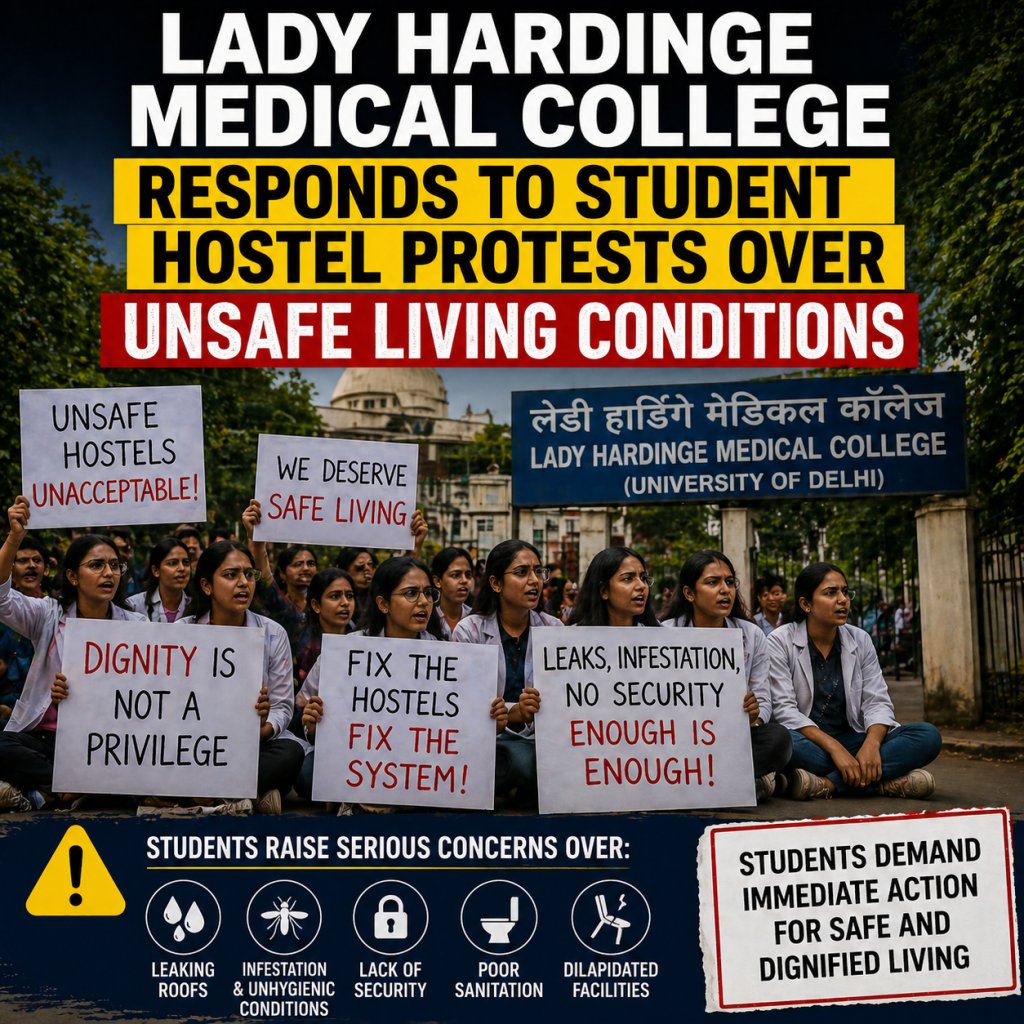
When you picture a future doctor, you probably imagine someone in a white coat focused on saving lives in a busy hospital ward but behind the scenes many medical students spend their nights in hostels that fall far short of basic standards. That reality hit home recently at Lady Hardinge Medical College (LHMC) in New Delhi, where around 200 students from the girls’ hostel decided enough was enough.
On around April 21, 2026 these young women staged a peaceful protest highlighting what they described as “extremely distressing and unsafe living conditions.” Their concerns weren’t minor inconveniences,they touched on health, safety and dignity during one of the most demanding phases of their training. The college administration responded quickly with a detailed press note on April 22 but not everyone is convinced the steps go far enough. Let’s break it down step by step, based on reports from the students, the official clarification and voices from the wider medical community.
What Sparked the Protest?
Medical college life is intense. Students often study 12–14 hours a day, handle clinical rotations and prepare for tough exams. Coming back to a hostel should offer a chance to rest and recharge. Instead many at LHMC’s girls hostel said the environment was making things worse.
Key issues raised included:
- Extreme heat and lack of cooling:Delhi summers can be brutal, yet students claimed they weren’t allowed to install air conditioners at their own expense. Authorities cited old wiring as the reason. Students pointed out that AC units existed in the warden’s room and some older hostels raising questions about consistency.
- Mess food quality:The compulsory mess served meals where insects and even larvae were reportedly found. Hygiene standards were described as poor, affecting daily nutrition for students already under pressure.
- Sanitation and water problems:Filthy washrooms, non functional or contaminated coolers, and instances of waterlogging made basic hygiene difficult. Students linked these to frequent infections.
- Stray dog menace:Dogs entering the premises created safety risks, including reported bites. Nighttime felt particularly unsafe, adding to stress levels.
A student representative captured the mood well: “This is not just about discomfort this is about health, dignity, and safety of medical students.” These aren’t abstract complaints. Poor living conditions can directly impact focus, immunity, and mental health especially when future doctors are training to care for others.
Similar stories have surfaced at other institutions over the years. From water shortages in one college to electrical hazards in another, infrastructure gaps in medical hostels are a recurring theme across India. LHMC protest stands out because it happened at a prestigious government college in the national capital, where expectations for standards run high.
College Administration’s Clarification
In response LHMC issued an official press note on April 22, 2026. The statement emphasized that multiple meetings had already taken place with student representatives, hostel authorities and administrative officials. The tone was measured and solution oriented, outlining specific steps already underway or planned.
Here’s what the administration highlighted:
- Hygiene and sanitation:They’re working to optimize existing staff deployment, manage leaves better, and request additional manpower from higher authorities.
- Mess operations:The mess is run contractually by the Students’ Union, not directly by the college. A major hurdle mentioned was around ₹30 lakh in pending dues from students to the current vendor which has slowed the switch to a better option. Notices have gone out to clear these dues, with potential administrative action if ignored.
- Stray dog safety:Extra security personnel, entry control systems, coordination with the North Delhi Municipal Corporation (NDMC) and NGOs for population control, hiring of dog chasers and daily monitoring rounds are in place. Students were advised not to feed strays and volunteers from the student union will assist.
- Cooling facilities:Safety concerns around electrical overloading are being reviewed. An air conditioned common room is already available, with plans for another in the new academic block. Longer term, a proposal for a completely new hostel building with modern amenities (including AC) is under consideration at the Ministry of Health and Family Welfare (MoHFW) level.
Note stressed that proposals have been submitted upward and that efforts are focused on “systematic and sustainable” improvements rather than quick fixes. This response shows the administration listened at least enough to hold meetings and document actions. It also shifts some responsibility back to students (for dues and not feeding dogs) which is a common administrative approach but one that needs careful handling to avoid seeming dismissive.
Expert Reaction: “Accountability Shift, Not a Solution”
Not everyone views the press note as sufficient. Dr. Rohan Krishnan, a health activist and Chief Patron of the FAIMA Doctors Association, shared a pointed response. He told reporters that the statement “is not a solution It shifts accountability.”
Dr. Krishnan noted that issues like hygiene, stray animals, and extreme heat have been flagged repeatedly without enough concrete follow through. He called the conditions “unacceptable” for medical students in the national capital and urged immediate sanitation improvements, heat relief measures, and clear timelines with accountability.
His perspective carries weight because FAIMA represents resident doctors and has advocated on student welfare before. It highlights a broader tension: students and their supporters want faster, more visible action, while administrations often point to procedural and budgetary constraints.
Why Hostel Conditions Matter More Than You Might Think
Beyond the headlines, this story touches something deeper. Medical students aren’t just “kids in college” they’re training to become the backbone of India’s healthcare system. Sleep deprivation, poor nutrition and constant stress already come with the territory. Add unsafe living conditions, and the risks multiply: higher chances of illness, burnout, anxiety, or even compromised clinical performance.
Real life scenario: Imagine a third year student who’s just finished a 36 hour duty. She returns to find her washroom unusable, skips a questionable meal and lies awake worrying about dogs outside or the heat. The next day her concentration slips during rounds. Multiply that across hundreds of students and you see how infrastructure gaps ripple outward to patient care. Data from various medical education surveys (though exact numbers vary) consistently show that inadequate hostel facilities contribute to higher dropout considerations and mental health challenges among MBBS students. In a country facing a doctor shortage in many areas, we can’t afford to let future physicians burn out before they even qualify.
Practical Insights and Steps Forward
For students facing similar situations anywhere in India, here are a few grounded suggestions based on how these issues usually play out:
- Document everything– Photos, videos (where safe and ethical) and dated logs of problems help when raising concerns formally.
- Use official channels first– Student unions, hostel committees, and grievance portals exist for a reason. Collective, respectful representation often gets faster results than individual complaints.
- Involve parents or alumni networks– Sometimes external voices amplify the message without escalating conflict.
- Focus on health evidence– Linking conditions to infections or academic impact (backed by doctor notes if possible) strengthens the case.
- Long term advocacy– Push for student representation on maintenance committees or budget reviews.
For college administrations: Transparent timelines, regular updates, and involving students in monitoring progress build trust. LHMC case shows that acknowledging problems quickly is good but follow through with measurable outcomes matters more.
Parents of prospective medical students might want to add hostel facilities to their college visit checklist. Ask about maintenance budgets, mess oversight and emergency protocols. A great academic reputation doesn’t always mean great living conditions.
FAQ
1. What exactly were the main student complaints at LHMC?
Primarily extreme heat without AC access, insect contamination in compulsory mess food, poor sanitation and filthy washrooms causing infections, non functional coolers with unsafe water, waterlogging and stray dog threats including bites.
2. Has the college taken any concrete steps?
Yes, The April 22 press note detailed staff optimization for sanitation, efforts to resolve mess vendor issues tied to ₹30 lakh in student dues, enhanced security and dog control measures, and plans for additional cooling spaces plus a new hostel proposal at the ministry level.
3. Is this kind of protest common in Indian medical colleges?
Unfortunately, yes. Reports of infrastructure and hygiene issues surface periodically at both government and private institutions. LHMC’s case gained attention because of its location and prestige but the underlying challenges funding, maintenance backlogs, and administrative delays are widespread.
4. What role do student unions play in mess and hostel management?
At many colleges like LHMC students union manages the mess on a contractual basis. This gives students some say but also means issues like payment delays can directly affect food quality and vendor transitions.
5. What can current or future medical students do if they face similar problems?
Start with documentation and dialogue through proper channels. Escalate to higher authorities (university, NMC, or ministry) only after internal options are tried. Joining or supporting doctor associations like FAIMA can provide additional guidance and visibility.
Moving Forward: A Call for Balanced Progress
The situation at Lady Hardinge Medical College isn’t just about one hostel or one protest. It’s a reminder that investing in the people who will care for us tomorrow matters as much as building fancy hospitals. Students have shown courage by speaking up. The administration has responded with a plan. Now the focus should shift to implementation clear timelines, follow up meetings and visible improvements before the next heat wave or monsoon hits.
If you’re a medical student, parent, doctor or simply someone who cares about the future of healthcare in India, this is worth paying attention to. Reach out to your local college representatives, support student welfare initiatives or simply spread awareness. Small consistent actions today can prevent bigger problems tomorrow.
What do you think should medical colleges prioritize hostel upgrades alongside academic infrastructure? Share your experiences in the comments. The more we talk about these issues openly, the harder it becomes for them to be ignored. Our future doctors and the patients they’ll treat deserve nothing less.
Disclaimer
This post is for informational and educational purposes only. It does not constitute medical advice, legal opinion or an official investigation. Readers should consult qualified healthcare professionals for personal health concerns. All details are drawn from media reports and outcomes of any official inquiry may provide further clarity.
Link: According to news reports https://www.newindianexpress.com/amp/story/states/delhi/2026/Apr/23/lady-hardinge-medical-college-issues-clarification-after-student-protests-over-hostel-conditions-in-delhi