It’s the kind of story that makes you pause. A young doctor, working long hours in a busy emergency ward, gets physically assaulted right there on duty. This time, it happened at Aligarh Muslim University’s (AMU) Jawaharlal Nehru Medical College and Hospital in Uttar Pradesh. The fallout? Resident doctors walked out in protest, bringing emergency services to a halt and shining a spotlight on a bigger issue that affects hospitals across India.
What started as one patient’s frustration over delays quickly turned into a larger conversation about respect, security and the daily realities faced by doctors. In this piece, we’ll walk through the facts of the case explore the reasons behind rising tensions in medical settings and share real insights and steps that could help prevent similar situations in the future. Whether you’re a doctor, a patient or someone who simply cares about our healthcare system, there’s value here for everyone.
What Happened at AMU Hospital
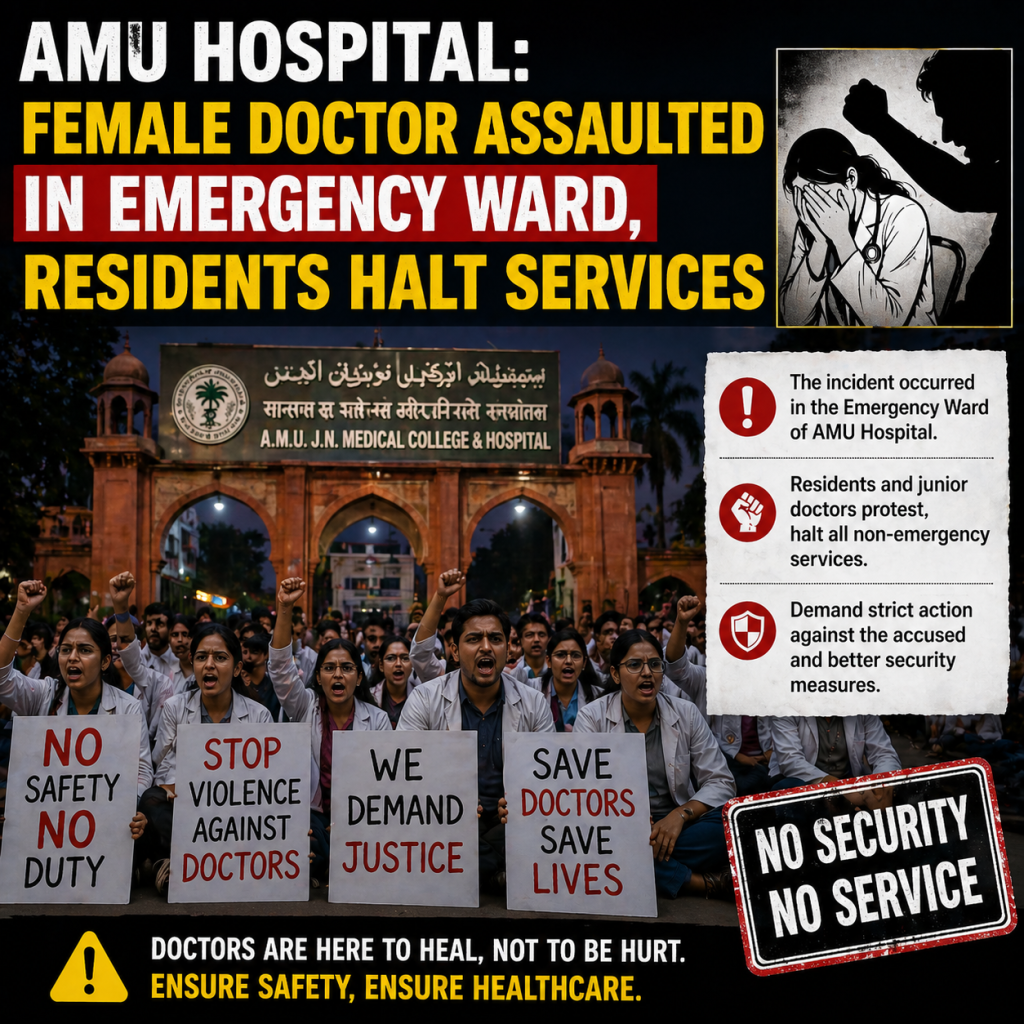
On Thursday afternoon, things escalated quickly in the emergency ward of Jawaharlal Nehru Medical College Hospital. A woman named Prachi Maheshwari, who lives in Aligarh’s ITI Road area had come in with her husband Navneet Maheshwari. She had already seen a doctor in the outpatient department earlier that day but when she reached the emergency section, delays piled up because of the usual heavy crowd.
According to reports from those close to the situation, the patient grew upset about not getting faster attention what some described as expecting special “VIP treatment.” In the heat of the moment, she allegedly slapped a female junior resident doctor on duty. The assault wasn’t just a verbal disagreement; it crossed into physical harm, leaving the young doctor shaken.
The hospital serves a large number of people from lower income backgrounds, and overcrowding is nothing new there but this incident pushed the resident doctors over the edge. By late Thursday, members of the Resident Doctors Association (RDA) decided enough was enough. They stopped non emergency work and focused only on critical cases, sending a clear message: they wouldn’t tolerate feeling unsafe at their workplace.
Strike and Its Immediate Impact
Strikes like this aren’t taken lightly by doctors. They know patients suffer when services slow down. Yet the RDA’s vice president Dr. Akhtar Ali, explained the move stemmed from a growing sense of insecurity. He pointed out that similar promises had been made after earlier problems things like extra security staff and a mobile police team but those steps hadn’t fully materialized due to budget limits and staffing shortages.
Emergency services took a hit right away. Patients arriving for urgent care faced longer waits and hospital officials had to scramble to manage the situation. AMU’s proctor Naved Khan confirmed that police acted promptly by registering a First Information Report (FIR) at the Civil Lines Police Station. The case was filed against the woman and her husband under sections dealing with assault on a public servant and obstructing government duties. Investigations are ongoing and authorities say they’re committed to resolving the matter.
By Friday, talks were happening between senior university officials and the RDA. The university acknowledged the security gaps especially the lack of enough female guards and said they’d pull in staff from other departments temporarily while pushing for permanent hires. It’s a classic case of quick fixes meeting long term challenges.
Why Violence Against Doctors Keeps Happening
This isn’t an isolated event. Across India, healthcare workers report facing aggression far too often. Crowded government hospitals, long waiting times and limited resources create a perfect storm. Patients and their families arrive stressed, sometimes after traveling far or dealing with serious illnesses. When expectations don’t match reality due to staff shortages or equipment delays frustration boils over.
Studies and reports from medical bodies show that a large percentage of doctors, especially juniors and women have experienced some form of workplace violence. Triggers include misunderstandings about treatment, high patient loads and even misinformation spread online. In government setups like AMU’s hospital where care is often free or low cost, the pressure is intense. What makes it worse is the human side. Many doctors work 24-36 hour shifts with little rest. A junior resident might be handling dozens of cases alone at night. Add in the emotional weight of delivering bad news, and it’s easy to see how small sparks can ignite bigger conflicts.
Real Cost to Patients and the System
When doctors strike, the people who lose out most are the patients. Emergency cases get delayed, routine check ups pile up and trust in the system erodes. Yet doctors argue that without feeling safe, they can’t deliver their best care anyway. It’s a tough balance.
On the flip side, hospitals and authorities need to step up. Better crowd management, clear communication about wait times and dedicated security teams can make a real difference. Some states have laws on the books to protect doctors Uttar Pradesh included but enforcement matters more than words on paper.
Practical Steps Toward Safer Hospitals
Here’s where we can turn concern into action. Hospitals, governments and even patients all have roles to play.
For hospital administrators and universities:
- Boost security with trained staff, including more women officers for sensitive areas like emergency and maternity wards.
- Install better CCTV coverage and panic buttons in high risk zones.
- Improve patient flow with appointment systems, clear signage, and regular updates on delays.
For doctors and medical associations:
- Push for ongoing training in de escalation techniques simple ways to calm tense situations before they explode.
- Document incidents promptly and follow up with police to ensure cases don’t drag on.
For patients and families:
- Remember that doctors are human too. A calm conversation goes further than anger. If delays happen, ask politely for updates rather than demanding immediate service.
- Understand that in busy public hospitals, everyone waits their turn based on medical urgency not who shouts loudest.
For policymakers:
- Fast track security upgrades and enforce existing protection laws more strictly.
- Address root causes like doctor shortages through better recruitment and working conditions.
Real world example: Many hospitals in other states have set up “patient grievance cells” that resolve complaints on the spot. Others use volunteers or counselors to guide families during tough times. These small changes have reduced flare ups noticeably.
Lessons from Similar Situations
We’ve seen this pattern before in different parts of the country. Whether it’s a busy Delhi hospital or a smaller facility in Uttar Pradesh, the story often starts the same: overcrowding meets high emotions. But places that invest in security and communication tend to see fewer incidents. The key takeaway? Prevention beats reaction every time.
FAQ
1. What exactly triggered the strike at AMU Hospital?
A female patient allegedly slapped a junior female doctor in the emergency ward over perceived delays and lack of special treatment. Resident doctors responded by striking to demand better safety measures.
2. How long is the strike expected to last?
As of the latest updates, talks are ongoing between doctors and university officials. The strike started Thursday afternoon and focuses on non emergency work while critical cases continue to be handled.
3. What legal steps have been taken?
Police registered an FIR against the patient and her husband for assault and obstructing public servants. The investigation is active and authorities say action was prompt.
4. Why do these assaults happen so often in Indian hospitals?
Main reasons include overcrowding, long waits, resource shortages and high stress levels for both patients and staff. Poor communication can turn frustration into conflict.
5. What can ordinary people do to support safer healthcare?
Treat medical staff with respect, report issues calmly through proper channels and back calls for better hospital infrastructure and security funding.
Moving Forward: Protecting Those Who Protect Us
Incidents like the one at AMU Hospital aren’t just news headlines they’re reminders that our healthcare system relies on dedicated people working under pressure. When doctors feel unsafe everyone loses. The good news is that solutions exist if we commit to them: smarter security, better resources, and a culture of mutual respect.
As patients, we can start by showing empathy in the waiting room. As a society, we need to push leaders for real changes that go beyond temporary fixes. If this story prompts even one hospital to review its security plan or one family to think twice before lashing out, it’s a step in the right direction.
What do you think? Have you or someone you know faced similar challenges in a hospital setting? Sharing experiences (respectfully) can help build awareness. Let’s keep the conversation going and work toward a healthcare environment where doctors can focus on healing without fear.
Disclaimer
This post is for informational and educational purposes only. It does not constitute medical advice, legal opinion or an official investigation. Readers should consult qualified healthcare professionals for personal health concerns. All details are drawn from media reports and outcomes of any official inquiry may provide further clarity.