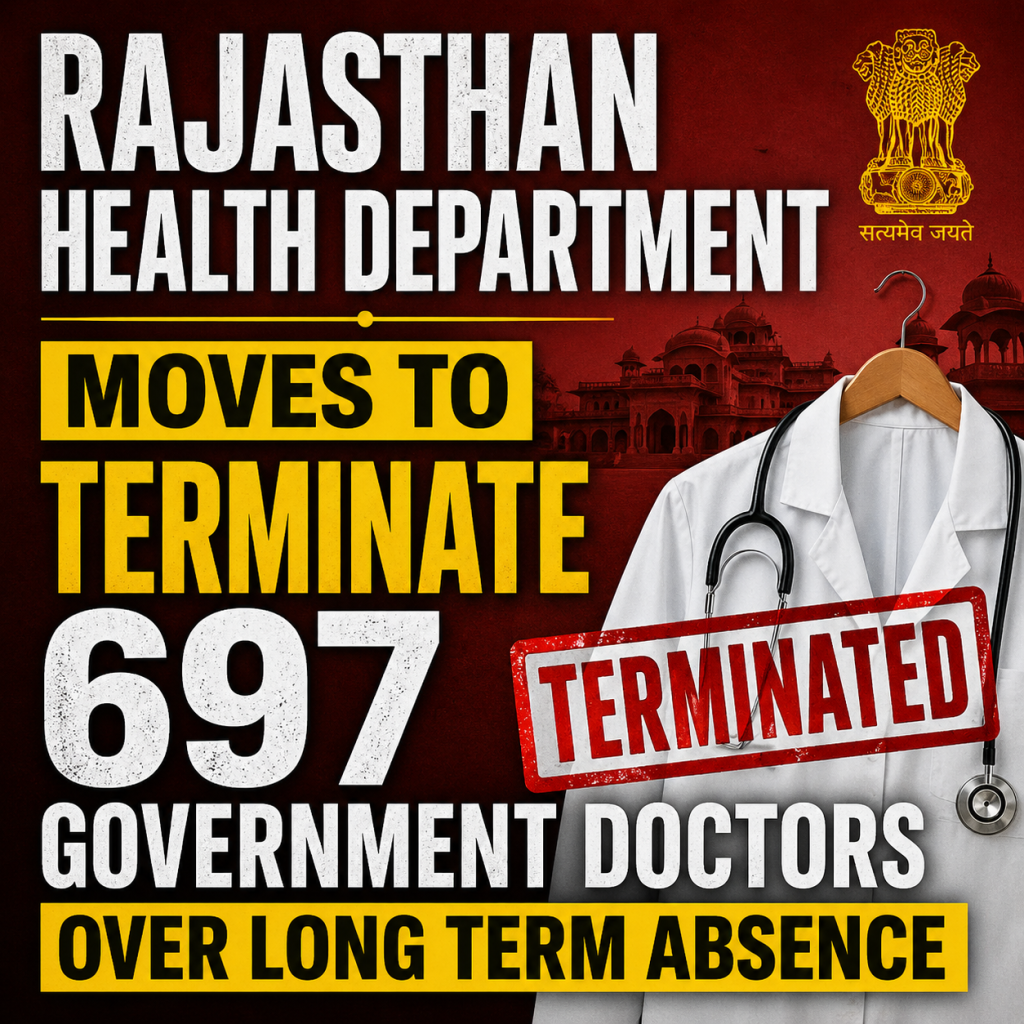
Rajasthan Health Department has taken a firm step that is now making headlines across the state. It plans to terminate the services of 697 government doctorswho have remained absent from their assigned posts for long periods.
This is not a sudden decision. Many of these doctors had received multiple notices over months or even years. The move comes at a time when Rajasthan, like many other states, continues to struggle with shortages of medical staff in rural and semi urban areas. For ordinary citizens especially those who rely on government hospitals and primary health centres this development raises important questions about access to care, accountability, and the future of public healthcare.
Let’s understand what is actually happening, why it matters and what it could mean for patients and the system as a whole.
Why Doctor Absenteeism Remains a Persistent Challenge
In many parts of Rajasthan, particularly in districts with difficult terrain or limited facilities, getting a doctor to stay posted for years is not easy. Doctors are often posted to Primary Health Centres (PHCs) or Community Health Centres (CHCs) in remote blocks. Some face genuine difficulties poor housing, lack of good schools for children, safety concerns or family separation.
However, when absence stretches into months or years without proper leave or intimation, it crosses into a different category. Health department records show that a section of doctors simply stopped reporting for duty after initial joining. In some cases, they continued drawing salaries while working elsewhere, often in private practice or other states.
This practice, sometimes called “ghost attendance,” creates a double burden. The government pays for a post that remains vacant and local patients are left without a regular doctor. In tribal areas like Banswara, Dungarpur or parts of Udaipur and Jodhpur divisions, even one missing doctor can mean hundreds of patients travelling 30–50 kilometres for basic treatment.
Current Action: Scale and Process
According to information shared by the Health Department, a detailed review of attendance records from the past few years identified 697 doctors whose absence could not be justified through official leave records. Most had been served show cause notices and given opportunities to explain their position. After due process, department has now moved to terminate their services.
This is one of the larger such exercises in recent years in Rajasthan. Department has clarified that the action targets only long term unauthorised absence, not doctors on approved leave, deputation or pursuing higher studies with permission. Officials have also indicated that the posts will be filled through fresh recruitment and transfer of doctors from areas with relatively better staffing. The entire exercise is expected to be completed in phases over the next few months.
How Patients Are Affected in Real Life
Consider the example of a small village in Pratapgarh district. For nearly eight months, the local PHC had no regular doctor. Patients with fever, pregnancy complications, or chronic conditions like diabetes had to travel to the district hospital. One young mother shared that she lost her baby because she could not reach the hospital in time during labour. Stories like these are not rare in areas where doctor presence is inconsistent.
When a doctor is absent, the ripple effect is immediate:
- Outpatient departments see long queues or remain closed on many days.
- Emergency cases get referred to faraway facilities, increasing both cost and risk.
- Preventive programmes immunisation drives, antenatal check ups and screening camps get delayed.
- Trust in the public health system erodes, pushing more people toward private care they can ill afford.
The termination decision therefore is not just an administrative matter. It directly touches the daily lives of thousands of families who depend on government facilities.
Systemic Issues Behind the Numbers
Rajasthan is not alone in facing this challenge. Across India, studies by various health organisations have pointed to absenteeism rates ranging from 15% to 40% in some rural postings. The reasons are complex:
- Rural posting reluctance: Many young doctors prefer urban or private-sector jobs.
- Infrastructure gaps: Lack of decent accommodation, reliable electricity, or internet connectivity makes long stays difficult.
- Career progression concerns: Doctors worry that years spent in remote areas may not count favourably for promotions or specialised training.
- Monitoring weaknesses: Traditional attendance registers can be manipulated; surprise inspections are infrequent in far flung blocks.
The Rajasthan government has tried several measures in the past biometric attendance machines, linking salary to Aadhaar linked attendance and performance based incentives. The current termination drive appears to be an escalation of these efforts.
What Can Be Done Differently: Practical Steps for Improvement
While strict action against unauthorised absence is necessary, long term improvement requires a balanced approach. Here are some practical measures that have shown results in other states and could be strengthened in Rajasthan:
- Better support for rural postings
Provide decent family accommodation, transport allowance, and priority admission for doctors’ children in good schools. Some states offer additional hardship allowance and faster promotions for doctors completing three to five years in difficult areas. - Transparent monitoring systems
Expand biometric and GPS based attendance with real time dashboards visible to district health officers. Combine this with random physical verification rather than relying solely on technology. - Flexible yet accountable leave policies
Allow doctors to apply for short-term deputation or study leave through a clear online process, reducing the temptation to simply disappear. - Telemedicine and task shifting
Where a doctor cannot be physically present every day, trained nurses or AYUSH doctors can handle routine cases under tele consultation from a district level specialist. This model has worked well in parts of Telangana and Andhra Pradesh. - Regular dialogue with medical associations
Involving doctors bodies in policy discussions can help identify genuine grievances early and prevent large scale disengagement.
Patients and local communities can also play a role. Reporting consistent absence through the state’s health helpline or district collector’s office creates pressure for timely action. At the same time, appreciating doctors who do serve diligently in tough conditions helps maintain morale.
Voices from Different Sides
A senior health official, speaking on condition of anonymity, said the department wants to send a clear message that public service comes with responsibility. “We respect the difficulties doctors face, but patients cannot be left without care indefinitely,” he noted.
A young doctor posted in a remote CHC shared a different perspective: “Many of us want to serve, but the system must also support us. If my child’s education suffers and there is no safety net, it becomes very hard to stay for years.”
A patient from a village in Barmer summed it up simply: “We don’t want big hospitals. We just want one doctor who comes every day and listens to us.”
Frequently Asked Questions
1. What exactly counts as “absent from duty” for termination?
Long-term unauthorised absence without approved leave, intimation, or valid medical grounds. Doctors who followed proper procedures are not affected.
2. Will terminating these doctors immediately reduce the total number of doctors available?
In the short term, some posts may remain vacant until new recruitments happen. However, the department plans to fill them through transfers and fresh appointments to minimise disruption.
3. Can the terminated doctors appeal the decision?
Yes. The usual government service rules allow affected employees to file an appeal or approach the Rajasthan High Court if they believe due process was not followed.
4. How does this compare with steps taken in other states?
Several states, including Uttar Pradesh, Madhya Pradesh, and Bihar, have conducted similar drives in recent years. Rajasthan’s exercise is among the larger ones in terms of numbers.
5. What can ordinary citizens do if their local health centre frequently lacks a doctor?
Use the state health department’s toll free helpline,register complaints on the CM Helpline or approach the district health officer. Consistent reporting helps authorities track problem areas.
Looking Ahead: A Balanced Path Forward
The decision to terminate 697 doctors marks a strong assertion of accountability in Rajasthan’s public health system. It sends a signal that long term absence will not be tolerated. At the same time, it also highlights the deeper need for supportive policies that make rural service attractive rather than punitive.
Healthcare delivery ultimately depends on both sides doctors who honour their commitment and a system that provides them with the tools, safety, and dignity to do their job well. Patients, too, have a stake. By staying informed, using available digital health services like eSanjeevani when needed, and constructively engaging with local health authorities, citizens can help build pressure for lasting improvement.
This episode is a reminder that public healthcare is a shared responsibility. When doctors show up reliably and systems support them properly, the biggest winners are the millions of families who simply want timely, affordable care close to home.
If you live in Rajasthan or have family members who depend on government hospitals, take a moment today to check the status of your nearest health centre. Ask questions, note patterns, and share feedback responsibly. Small actions at the community level, combined with firm administrative steps like the one announced can together move the needle toward a more reliable healthcare system for everyone.
Disclaimer
This post is for informational and educational purposes only. It does not constitute medical advice, legal opinion or an official investigation. Readers should consult qualified healthcare professionals for personal health concerns. All details are drawn from media reports and outcomes of any official inquiry may provide further clarity.
Link: According to the reports from The times Of India
https://timesofindia.indiatimes.com/city/jaipur/state-govt-moves-to-terminate-697-doctors-missing-from-duty/amp_articleshow/130478149.cms