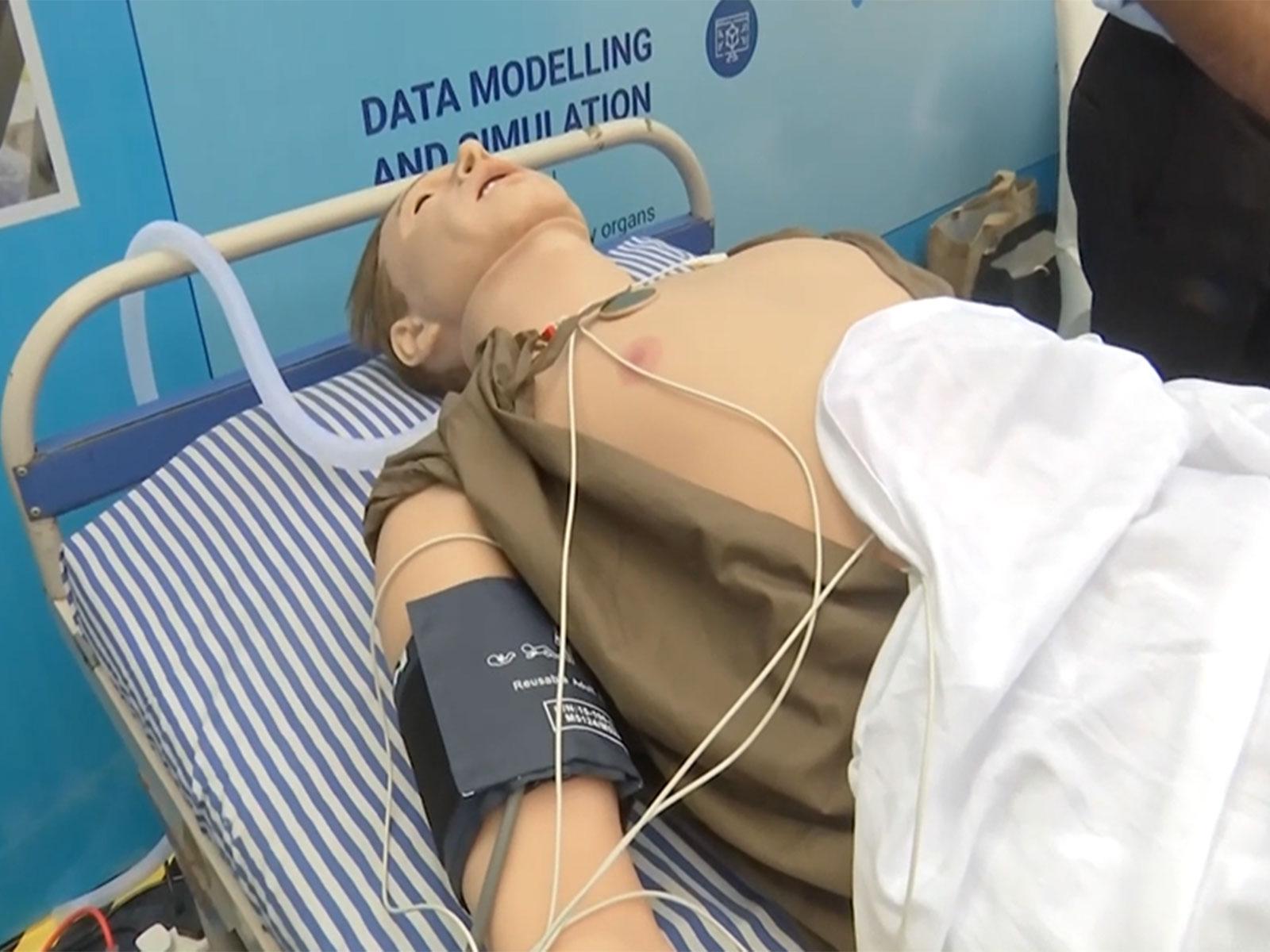
IIT Indore has developed an AI powered human digital twin under the Charak DT Platform to help doctors simulate diseases and enable early and preventive diagnosis. This futuristic human like replica can mimic breathing and blinking and allows medical experiments to be tested digitally before real world treatment, marking a major leap in Indian healthcare technology.
The Madhya Pradesh Regional AI Impact Conference 2026, held in Bhopal on January 15, witnessed a remarkable technological breakthrough that drew the attention of researchers, doctors, and technology experts alike. One of the most discussed innovations at the event was an artificial intelligence powered human body replica designed to help detect diseases and assist in early diagnosis. This cutting-edge system represents a significant step forward in the integration of artificial intelligence with medical science.
IIT Indore’s Human-Like AI Replica
The human-like AI-powered replica has been developed by the Indian Institute of Technology (IIT) Indore. This advanced model is capable of mimicking basic human functions such as breathing and blinking, making it visually and functionally similar to a real human being. More importantly, it is designed to identify disease patterns within the human body by simulating how illnesses affect different organs. Conceptualized as a digital twin of the human body, this AI system aims to support doctors in early and preventive diagnosis, potentially transforming the way diseases are studied and managed.
Drishti CPS and the National Mission on Cyber-Physical Systems
Speaking to ANI, Vaibhav Jain from Drishti CPS, IIT Indore, explained the broader ecosystem behind this innovation. Drishti CPS is a technology innovation hub at IIT Indore supported by the Department of Science and Technology, Government of India, under the National Mission on Interdisciplinary Cyber-Physical Systems (NM-ICPS). The center provides extensive support in technology development programs for faculty and students and also extends assistance to startups working in various domains. So far, around 89 startups have been funded through this initiative, reflecting its growing impact on India’s innovation landscape.
The Charak DT Platform and Preventive Healthcare Vision
Jain further explained that Drishti CPS has recently expanded into healthcare technology through a new initiative called the Charak DT (Digital Twin) Platform. The primary goal of this platform is to create a digital twin of the human body that can be used for preventive diagnosis of diseases. According to him, preventive measures can first be tested on the digital twin model of a patient before being applied in real life. This human replica not only looks like a real person but can also simulate physiological functions such as breathing and blinking, allowing researchers and doctors to conduct various medical experiments, including testing medicines and treatment strategies, in a controlled and safe digital environment.
How the Human Digital Twin Works
The digital twin is essentially an AI-based human model trained on multiple human parameters that are known to lead to different diseases. Whenever these parameters cross certain thresholds, the system can generate diagnostic insights using a combination of advanced technologies. At present, the team has developed a digital twin model for the lungs. In the future, they plan to expand this to include the cardiovascular system and other organ systems. Over time, multiple digital twins representing different parts of the human body will be integrated into the Charak DT platform.
Clinical Validation with AIIMS Support
An important aspect of this project is its clinical validation. Jain highlighted that the initiative is being supported by three major institutions, AIIMS Bhopal, AIIMS Delhi, and AIIMS Raipur. These institutions are collaborating on clinical validation and on the development of other healthcare technology products associated with the platform. This collaboration ensures that the technology is not only innovative but also medically reliable and clinically relevant.
A Step Towards the Future of Preventive Medicine
The unveiling of this AI-powered human digital twin marks a significant milestone in the journey toward predictive and preventive healthcare in India. By allowing doctors to simulate diseases and treatments on a digital human model before applying them to real patients, this technology has the potential to reduce risks, improve early diagnosis, and personalize medical care in the coming years.
Source: This article is based on reports by ANI (Asian News International).
The National Testing Agency has officially announced the new date for the NEET UG 2026 re examination after cancelling the earlier exam due to the alleged paper leak controversy. The re exam will now be conducted on June 21, 2026, affecting more than 22 lakh medical aspirants across India.
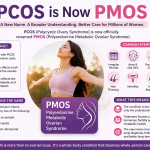
PMOS, previously known as PCOS, is a newly renamed condition that better reflects its hormonal and metabolic effects beyond the ovaries. The change from Polycystic Ovary Syndrome to Polyendocrine Metabolic Ovarian Syndrome highlights its association with insulin resistance, obesity, fertility issues, and long term health risks affecting millions of women worldwide.
A doctor in Bhilwara allegedly attempted suicide by consuming phenyl after accusing a private hospital operator of financial exploitation, unpaid salary, mental harassment, and police inaction. The incident has sparked concern over workplace conditions and disputes in the medical profession.