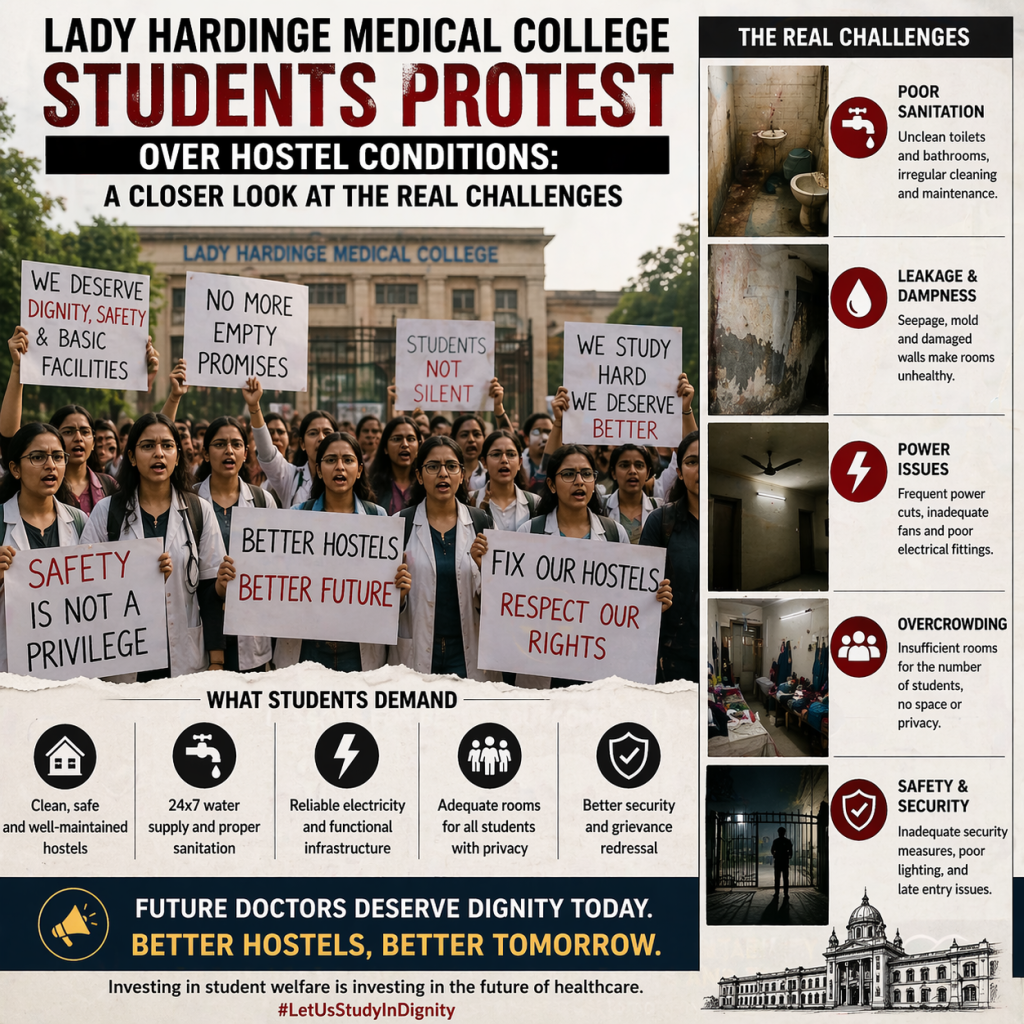
When you picture medical students in India, you probably imagine late night study sessions, white coats and stethoscopes. What you don’t usually see is the daily struggle of living in hostels where basic needs like safe food, clean water and relief from Delhi’s scorching summers feel like luxuries. Recently students at Lady Hardinge Medical College (LHMC) decided enough was enough. They stepped out of their lecture halls and into the open, peacefully raising their voices about hostel conditions that have been affecting their health, studies and overall well being. This isn’t just another campus complaint. It highlights a bigger conversation about how environments where future doctors live can directly influence the quality of care they’ll one day provide to patients. In this article, we’ll break down what’s happening, why it matters and most importantly what practical steps can make a real difference for students facing similar situations across the country.
Spark: How the Protest Started
It began quietly. A group of female students from the girls’ hostel at LHMC started noticing recurring problems that no amount of “adjusting” could fix. What started as whispered conversations in the mess hall soon turned into a collective decision to speak up. Around 150–200 students gathered outside the hostel premises, holding simple handmade placards and sharing their experiences calmly with anyone willing to listen.
Unlike dramatic headlines you sometimes see this was a measured, student led effort, young women emphasized they weren’t looking for special treatment just the basic standards anyone would expect when paying hostel fees and devoting their lives to one of the toughest academic programs in India.
One second year MBBS student (let’s call her Priya for privacy) shared a typical day: waking up to waterlogged corridors after overnight rain, heading to the mess only to find visible insects in the dal, and then trying to study or sleep in a room where the temperature crossed 40°C with no functional cooling. “We’re training to save lives,she said but we can’t even take care of our own basic health here.”
Breaking Down the Main Grievances
1. Food Quality and Hygiene Concerns
Mess food is compulsory for most residents, yet students report frequent issues with insects, larvae and overall poor hygiene. This isn’t occasional, it’s become a pattern that affects daily nutrition. Medical students already face irregular schedules and high stress; when the only reliable food source is unreliable, it leads to skipped meals, digestive problems, and weakened immunity.
In one real life scenario shared during the protest, a group of interns described finding cockroach parts in their evening meal. Instead of studying for exams, they spent the night dealing with stomach issues. Nutrition experts agree: poor hostel food directly impacts concentration and long term health something future doctors know better than most.
2. Extreme Heat and Lack of Air Conditioning
Delhi summers are brutal, and this year has been no exception. Students say the hostels lack proper air conditioning and requests to install personal AC units (at their own expense) have been turned down due to “old wiring” concerns. Meanwhile, common areas and administrative spaces reportedly have better facilities. This double standard has left students battling heat exhaustion, dehydration and sleepless nights.
Practical impact? Sleep deprivation and heat stress make it harder to retain complex medical concepts or perform well during clinical rotations. One intern mentioned fainting during a ward duty after a particularly hot night in the hostel.
3. Waterlogging, Infrastructure, and Safety Issues
Monsoon rains turn parts of the hostel into mini ponds. Water seeps into rooms, bathrooms remain unclean, and drinking water coolers often stop working or show signs of contamination. Stray animals occasionally enter the premises, adding another layer of safety worries.
These aren’t minor inconveniences. Standing water breeds mosquitoes, which in a medical college setting raises genuine concerns about vector borne diseases like dengue exactly what these students are learning to treat.
Why This Matters: Impact on Future Doctors
Medical training is already one of the most demanding paths in India. Students handle 12–16 hour days, emotional pressure from patient cases, and the constant fear of failing competitive exams. When hostel conditions add physical and mental strain, effects ripple outward.
Poor living conditions can lead to:
- Increased burnout and anxiety– Studies from medical education bodies show that even small environmental stressors compound the already high rates of depression among MBBS students.
- Lower academic performance– When you’re sick or sleep-deprived, memorizing pharmacology or mastering surgical skills becomes exponentially harder.
- Long term health habits– Doctors who learn to “adjust” to unhygienic conditions might unintentionally carry similar attitudes into their professional lives, affecting patient safety standards later.
This protest isn’t just about comfort,it’s about creating an environment where the next generation of healthcare professionals can thrive.
Bigger Picture: Hostel Challenges Across Indian Medical Colleges
Lady Hardinge isn’t an isolated case. Similar stories have emerged from other reputed government and private medical institutions over the years. From outdated plumbing in Uttar Pradesh colleges to overcrowded rooms in southern states, pattern is clear: rapid expansion of medical seats hasn’t always been matched by investment in student infrastructure.
Medical Council of India (now NMC) has guidelines on minimum hostel standards but enforcement varies. Many colleges still operate on decades old buildings not designed for today’s climate realities or student numbers. Parents paying hefty fees (or students taking education loans) naturally expect basic dignity in return.
Practical Steps: What Students and Colleges Can Do Right Now
Here’s where the article gets actionable. Whether you’re a current medical student, a parent or an administrator, these steps can help:
For Students:
- Document everything– Keep photos, videos and dated notes of issues. This creates a clear record for formal complaints.
- Use official channels first– Approach the hostel warden, then escalate to the dean or anti ragging committee if needed.
- Form student welfare committees– Many colleges already have these; if not propose one through the student union.
- Know your rights– RTI applications can be filed for details on hostel maintenance budgets. The NMC website lists expected standards.
For College Authorities:
- Conduct regular audits– Monthly hygiene and infrastructure checks with student representatives.
- Budget for upgrades– Prioritize pest control, plumbing repairs, and climate-appropriate cooling solutions.
- Transparent communication– Hold town-hall meetings where students can voice concerns without fear.
For Parents:Ask direct questions during college visits: “How often is the mess inspected? What’s the backup plan during monsoons? Are there functional ACs or coolers in every block?”
Moving Forward: Building Better Systems
Students at Lady Hardinge have shown that calm collective advocacy can bring attention to important issues. College officials have reportedly begun discussions with the protesting group, which is a positive first step. Ultimately, this is about more than one college. India is producing thousands of new doctors every year to meet healthcare demands. Investing in their living conditions isn’t an expense it’s an investment in better trained healthier professionals who will serve millions of patients.
FAQ
1. What exactly are the students at Lady Hardinge Medical College demanding?
They’re asking for immediate improvements in mess food hygiene, functional cooling systems during summer, proper drainage to prevent waterlogging, clean drinking water and basic safety measures. Most importantly, they want consistent maintenance rather than one time fixes.
2. Are protests like this common in medical colleges?
Yes, though they vary in scale. Many institutions have seen similar student-led movements when basic living standards fall below acceptable levels. Difference here is the peaceful, well documented approach taken by the LHMC students.
3. How can current medical students address hostel problems without joining a protest?
Start by submitting written complaints through proper channels, gather support from batchmates and involve parents or alumni networks. In serious cases, reaching out to the National Medical Commission or state health universities can help.
4. What role does the government play in fixing these issues?
National Medical Commission sets minimum infrastructure standards for affiliated colleges. Regular inspections and linking funding to compliance could ensure better enforcement across the country.
5. How do poor hostel conditions affect long term career outcomes for doctors?
Chronic stress and health issues during training can lead to higher burnout rates later in practice. A supportive environment during MBBS years helps build resilience and better clinical focus.
Final Thoughts: Time to Prioritize Student Welfare
Protest at Lady Hardinge Medical College is a reminder that even the brightest minds need a functional place to rest, eat and recharge. Medical education is tough enough without fighting your own hostel for basic dignity.
If you’re a student reading this keep documenting, keep advocating and remember your voice matters. If you’re an administrator listen early and act decisively and if you’re a parent or future MBBS aspirant factor in hostel facilities when choosing a college; they’ll shape your child’s experience as much as the faculty does.
Real change happens when we stop treating hostels as an afterthought and start seeing them as an essential part of medical training. Students who walked out with placards aren’t just fighting for themselves, they’re setting an example that better systems are possible. Let’s make sure their message leads to lasting improvements not just temporary attention.
What do you think should hostel standards be given the same importance as academic rankings? Drop your thoughts in the comments below, and if you’re facing similar issues, feel free to share (anonymously if needed). Together we can push for the kind of environment our future doctors truly deserve.
Disclaimer
This post is for informational and educational purposes only. It does not constitute medical advice, legal opinion or an official investigation. Readers should consult qualified healthcare professionals for personal health concerns. All details are drawn from media reports and outcomes of any official inquiry may provide further clarity.
Link: According to TOI reported https://timesofindia.indiatimes.com/city/delhi/insects-in-food-protest-at-lady-hardinge/amp_articleshow/130424809.cms