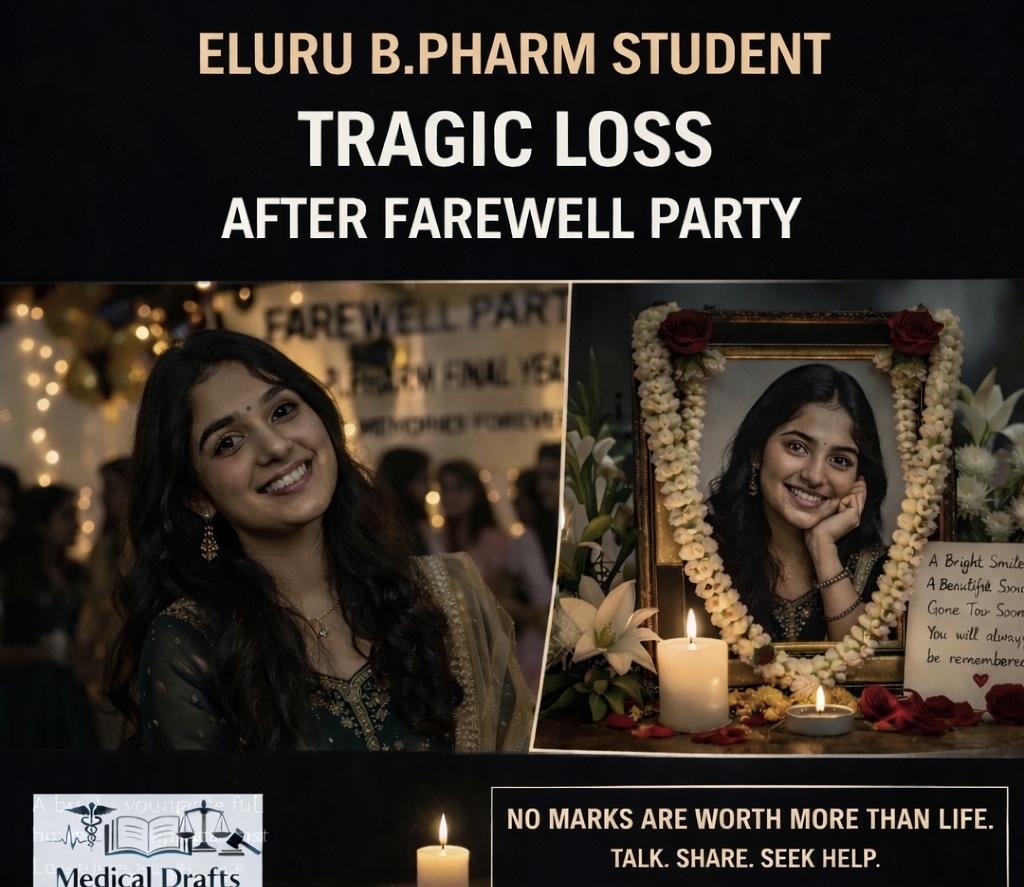
In the quiet town of Eluru, Andhra Pradesh, a heartbreaking incident has once again shone a spotlight on the silent mental health crisis gripping India’s young students. A third year B.Pharm student at Sir C.R. Reddy College of Pharmaceutical Sciences allegedly took her own life after a college farewell party. Reports suggest she forced to dance by her friends and some comments in the party. Police tells she spoke briefly with family and then jumped from the hostel building. Despite being rushed to a hospital, she could not be saved.
This is not an isolated story. It reflects a deeper systemic issue affecting thousands of students pursuing professional courses like pharmacy, engineering and medicine. As someone passionate about student well being and healthcare education. I believe we must move beyond shock and grief to action. This blog explores the pressures faced by B.Pharm students, why such tragedies are rising, and most importantly practical steps we can all take to prevent them.
The Alarming Rise in Student Suicides in India
According to the latest National Crime Records Bureau (NCRB) data for 2023, India recorded 13,892 student suicidesa staggering 65% increase from 8,423 in 2013. Student suicides now account for over 8% of all suicides in the country, rising faster than the national average.
Professional degree programs including B.Pharmacy are particularly high risk. Students in these fields often face intense academic competition, lengthy curricular clinical training and high parental expectations for future career success.
Why B.Pharm Students Are Especially Vulnerable
Pharmacy education in India is rigorous. A typical B.Pharm course demands mastering complex subjects like pharmacology, medicinal chemistry and pharmaceutical analysis often alongside practical lab work and internships. Many students come from smaller towns and villages (like the victim in Eluru, who hailed from Kuchipudi village in Pedavegi mandal) and step into urban or semi urban college hostels for the first time.
Common triggers include:
- Academic overloadand fear of failure in competitive exams.
- Peer pressureduring social events like farewell parties, freshers’ meets, or cultural fests where “fun” can sometimes cross into discomfort or bullying.
- Hostel adjustment issues, homesickness, and limited privacy.
- Career uncertaintyin a field where job placements can feel uncertain amid changing regulations and market demands.
- Lack of open conversationsabout stress, anxiety, or depression due to stigma.
In the Eluru case, preliminary reports point to distress after being pressured to participate in the farewell party. While we await the full police investigation, one thing is clear: even “celebratory” moments can become tipping points when underlying mental health struggles go unaddressed.
Recognizing the Warning Signs
Parents, teachers, and friends play a crucial role. Look for these red flags in students:
- Sudden withdrawal from social activities or group chats.
- Changes in sleep or eating patterns.
- Drop in academic performance or missing classes.
- Expressions of hopelessness, excessive guilt or feeling like a burden.
- Increased irritability or emotional outbursts after social events.
Institutions like pharmacy colleges need to treat mental health as seriously as academics:
- Mandatory orientation sessions on stress management.
- 24/7 access to counselors and peer support groups.
- Clear policies against ragging or forced participation in events.
- Regular mental health awareness workshops.
A Message of Hope and Collective Responsibility
The loss of a bright young student like the one in Eluru is devastating but every tragedy like this can become a catalyst for change if we choose to learn from it. Pharmacy students are the future of India’s healthcare system. They deserve campuses that nurture not just their minds but their emotional well being too.