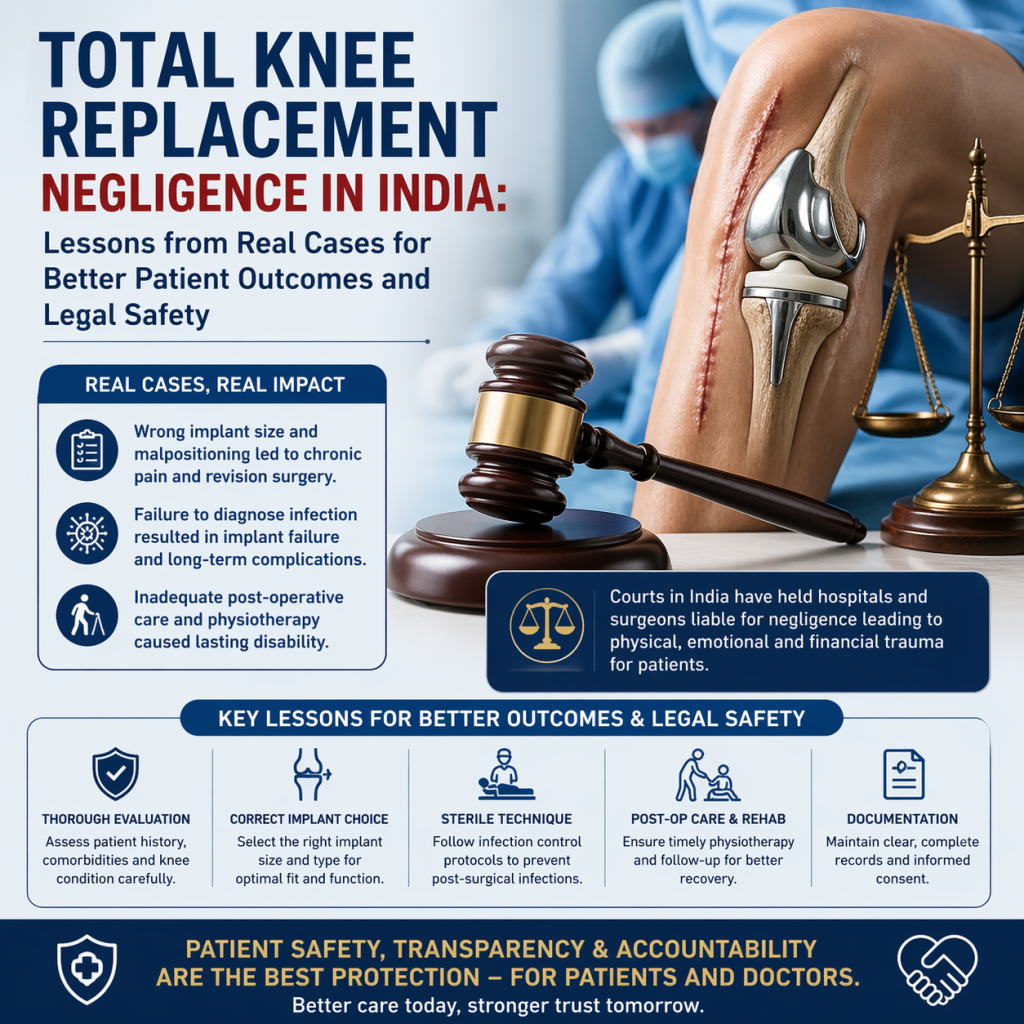
Total knee replacement (TKR) has become one of the most common orthopaedic procedures in India especially among older adults dealing with severe arthritis with an ageing population and better access to surgery, thousands of patients undergo TKR every year hoping for pain relief and improved mobility. Most surgeries go well but when complications arise, they can sometimes lead to medico legal disputes. A recent case shared by medicolegal consultant Dr. Mayur Sarode highlights how post operative issues like infection and implant problems can turn into allegations of negligence.
This article looks at a real world example of alleged TKR negligence breaks down the key medico legal issues involved and offers practical actionable advice for surgeons. Whether you’re an orthopaedic doctor looking to strengthen your practice or a patient considering knee replacement, you’ll find clear insights to help make better decisions and reduce risks. Goal isn’t to scare anyone complications can happen even with the best care but to show how standard protocols, clear communication and proper documentation make a real difference.
What Is Total Knee Replacement and Why Are Medico Legal Cases Rising?
Total knee replacement involves removing damaged bone and cartilage from the knee joint and replacing it with artificial components, usually made of metal and plastic. It’s highly effective for advanced osteoarthritis when conservative treatments like medicines, physiotherapy or injections no longer help. Success rates are generally strong: studies show 85-95% of patients report significant pain relief and better function at one year.
Yet India has seen a noticeable rise in complaints related to orthopaedic procedures. According to medical council records and consumer forum data, common triggers include infection, implant failure, stiffness or dissatisfaction with results. Courts and medical councils evaluate these cases using the Bolam principle (what a reasonable doctor would do) and expect adherence to standard protocols. Not every bad outcome equals negligence known risks like infection (typically 1-2% in well equipped centres) are accepted if proper care was documented. However, preventable lapses in implant selection, infection control or follow up can shift the balance.
A Real Life Example of Alleged TKR Negligence
Consider a case involving an elderly female patient with long standing knee pain since 2015. After conservative treatment failed, she was advised TKR with assurances of quick recovery and easy walking. Surgery was performed but the post operative period brought trouble.
Patient developed a wound infection. Sutures burst and re suturing was done hurriedly outside the operating theatre. Physiotherapy was handled by non professional staff without a knee brace. Infection worsened, damaging the implant and eventually requiring removal of the knee cap (patella). Patient ended up with permanent disability and could no longer walk normally.
Patient approached the Karnataka Medical Council (KMC) and later the consumer court. Allegations included use of an inferior implant, poor infection control, inadequate post operative care, defective informed consent and weak follow up. The defence argued the patient had been irregular in visits and that the same implant had been used successfully in other cases. However discharge summaries showed poor healing and records from the next hospital confirmed severe infection and implant issues.
KMC found evidence of substandard implant quality lapses in infection management and insufficient follow up, leading to a six month suspension of the doctor’s registration, consumer court relied heavily on the KMC findings and awarded compensation of ₹4.15 lakh (₹2,95,638 for medical expenses, ₹1,00,000 for mental agony, and ₹20,000 for litigation costs). This outcome reflects how medical councils and courts often treat expert body findings as strong evidence.
This case shared publicly by Dr. Mayur Sarode, a medicolegal consultant from Nashik is not isolated. Similar patterns appear in other consumer disputes across India though many NCDRC (National Consumer Disputes Redressal Commission) rulings clarify that a known complication alone does not prove negligence if the surgeon followed accepted standards and documented the process.
Key Medico Legal Issues in TKR Cases
Several recurring themes emerge in TKR related complaints:
- Infection Control and Post-Operative Care
Surgical site infection is a recognised risk but courts examine whether standard bundles (prophylactic antibiotics, sterile technique, timely wound management) were followed. Re suturing in the ward instead of theatre or delegating critical rehab to unqualified staff can be viewed as avoidable lapses. - Implant Quality and Product Liability
Surgeons must document the brand, batch and lot numbers of implants. Using unverified or low cost devices without proper sterility or certification records weakens the defence even if the same implant worked elsewhere. - Informed Consent and Communication
Simply saying “quick recovery” without discussing risks (infection, revision surgery, stiffness or implant failure) can amount to defective consent. Indian courts expect documented discussions in the patient’s language, covering realistic expectations and alternatives. - Documentation and Follow Up
Weak records such as missing serial follow up notes, investigation reports or red flag warnings make it harder to prove that care was reasonable. Fixed follow up schedules and clear instructions on warning signs strengthen the position. - Vicarious Liability
Hospitals and surgeons can be held responsible for acts of unqualified staff, such as non professional physiotherapists.
Practical Prevention Strategies for Orthopaedic Surgeons
The good news is that most of these issues are preventable with consistent habits. Here’s a step by step approach many experienced surgeons follow:
- Strengthen Informed Consent
Use a printed, patient specific form in the local language. Explicitly mention infection risk, implant failure, revision possibility and recovery timeline. Have the patient and an attendant sign it after discussion. Note the date, time and key points explained. - Choose and Document Implants Carefully
Stick to CE marked or US FDA approved implants from established manufacturers. Record batch/serial numbers in the operation notes and discharge summary. Never compromise on quality to reduce costs courts take product liability seriously. - Implement Strict Infection Control
Follow hospital infection control protocols: timely prophylactic antibiotics, laminar flow OT where available and standardised wound care. If infection is suspected (rising CRP/ESR, discharge) investigate promptly and refer early to a higher centre if needed. - Standardise Post-Operative Rehabilitation
Ensure only qualified physiotherapists handle rehab. Use knee braces or continuous passive motion (CPM) machines as per protocol in the early phase. Document milestones and patient compliance. - Set Up Structured Follow-Up
Schedule visits (e.g., day 3, 7, 14, then 6 weeks, 3 months). Provide written instructions on red flag symptoms (fever, swelling, redness) and when to return immediately. Maintain digital or paper records for at least 5–7 years. - Communicate Honestly When Complications Arise
Explain the situation transparently, offer second opinions if appropriate, and avoid delay in management. Early, empathetic communication often prevents escalation to formal complaints. - Maintain Professional Indemnity Insurance
Keep coverage adequate (₹50 lakh or higher recommended) and review policy terms regularly.
Reviewing protocols periodically and participating in continuing medical education (CME) on medico legal topics also helps. Dr. Sarode’s case studies repeatedly emphasise that “surgery success = operation theatre skill + follow-up + documentation + communication.”
What Patients Should Know Before Choosing TKR
Patients play an important role too. Before surgery, ask your surgeon:
- What is the expected recovery timeline and possible risks?
- Which implant will be used and why?
- Who will handle physiotherapy?
- What is the follow-up plan if any problem arises?
Look for a surgeon and hospital with good infection control records, clear consent processes and transparent pricing. Second opinions are perfectly reasonable for elective surgery.
FAQ
1. Is every infection after TKR considered medical negligence?
No. Infection is a known risk (around 1-2% in standard settings). Courts and medical councils look for whether reasonable preventive steps and timely management were taken and properly documented.
2. How important is informed consent in TKR?
Extremely important. It must be specific, documented and cover realistic outcomes and risks. Generic or overly optimistic assurances without discussion can lead to successful claims of defective consent.
3. Can a surgeon be held liable for an implant failure?
Yes, if the implant was substandard or not properly documented. Surgeons should record brand and batch details; hospitals may also share liability.
4. What should a doctor do if a patient files a complaint with the medical council?
Respond promptly with all records, seek legal or medicolegal advice and avoid ignoring notices. Early engagement often leads to better outcomes.
5. How can patients reduce their own risk of dissatisfaction?
Choose an experienced surgeon, clarify expectations, follow post op instructions strictly and attend all follow ups. Keep copies of consent forms and discharge summaries.
Moving Forward: A Balanced Approach Benefits Everyone
Total knee replacement remains a life changing procedure for many when performed with care. Case discussed here shows that lapses in seemingly routine areas implant verification, infection protocols, physiotherapy supervision, consent and follow up can have serious professional and financial consequences. At the same time Indian courts have consistently held that a poor result alone does not prove negligence if the doctor acted as a reasonably competent professional would.
For surgeons, takeaway is straightforward: invest time in robust systems and communication. For patients, it’s about informed choice and active participation in recovery. By focusing on these fundamentals, the orthopaedic community can continue to deliver excellent outcomes while minimising avoidable disputes.
Take a moment today to review your own consent forms, follow-up protocols, or documentation practices. Small improvements in these areas can make a big difference in patient safety and professional peace of mind. If you’re a patient preparing for TKR, don’t hesitate to ask questions clear understanding leads to better results.
Disclaimer
This post is for informational and educational purposes only. It does not constitute medical advice, legal opinion or an official investigation. Readers should consult qualified healthcare professionals for personal health concerns. All details are drawn from media reports and outcomes of any official inquiry may provide further clarity.