This isn’t a high profile scam involving crores. It’s a small bribe kind that ordinary citizens encounter when they least expect it. Yet, cases like this expose deep rooted systemic issues that erode public trust in doctors and government hospitals. In this blog post, we take a closer look at what happened, why it matters and what it reveals about the state of medical ethics and anti corruption measures in rural India.
The Incident: How a Simple Certificate Led to an Arrest
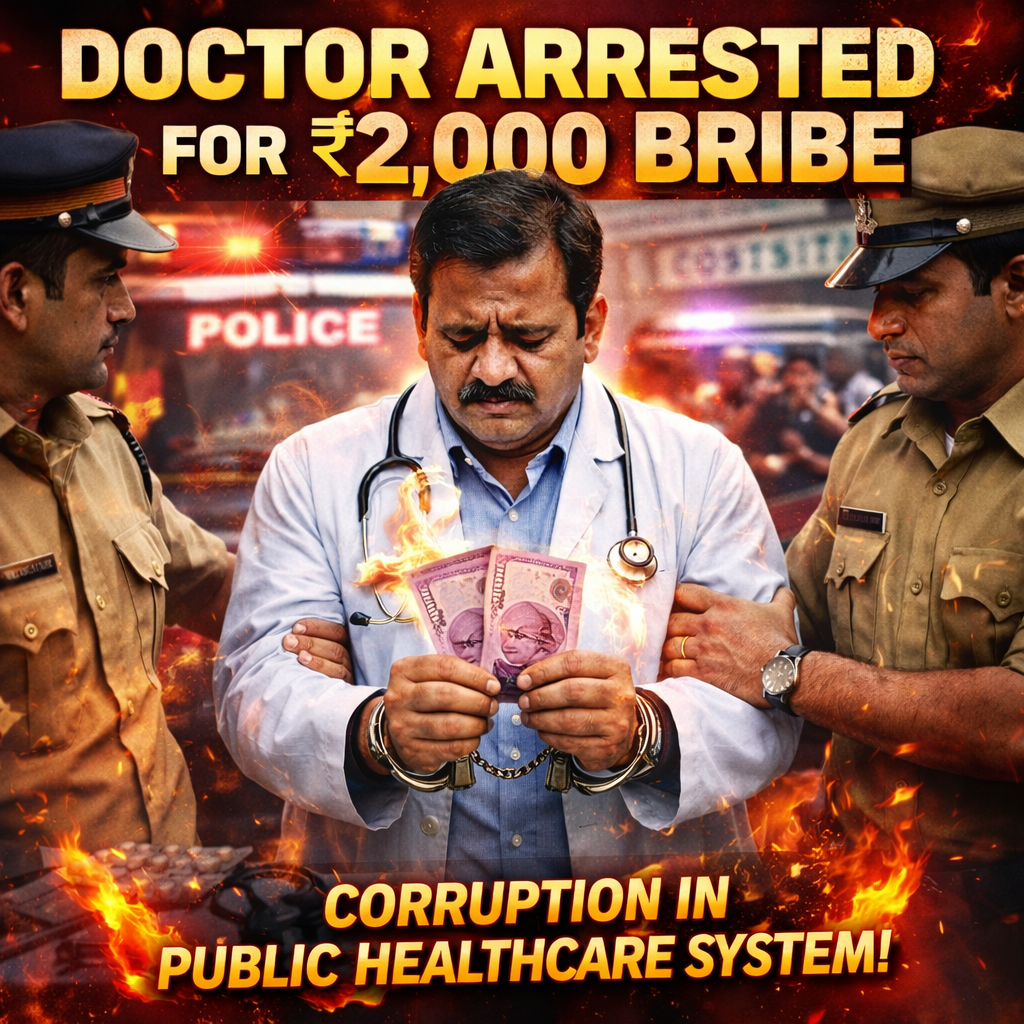
According to reports, a complainant approached Murbad Rural Hospital for a mandatory medical fitness certificate needed to renew his father’s revolver licence. An ambulance driver associated with the hospital allegedly demanded ₹3,000 initially which was later negotiated down to ₹2,000. The driver reportedly acted as an intermediary on behalf of Dr. Anil Patil.
Instead of paying up the complainant did the right thing,he approached the ACB with a complaint. The bureau laid a trap on the hospital premises and caught Dr. Patil red handed while accepting the bribe amount. The doctor has been booked under relevant sections of the Prevention of Corruption Act, 1988.
The ACB is now investigating whether more people are involved and if similar demands were made from other applicants in the past. The ambulance driver, identified as Mahendra Hindurao, is currently absconding. This operation highlights how even small scale corruption in routine government services can be tackled when citizens and enforcement agencies work together.
Who Is Dr. Anil Patil and What Is Murbad Rural Hospital?
Murbad Rural Hospital serves the semi rural and tribal pockets of Thane district. Like many government run facilities in smaller towns, it caters to a large population with limited resources. Medical officers posted here handle everything from routine check ups and certificates to emergency care. Dr. Anil Patil until his arrest was one of the doctors responsible for issuing various fitness and medical certificates documents that are often mandatory for licences, jobs, admissions and legal purposes. While most doctors perform these duties honestly, a single bad apple can damage the reputation of the entire public health system.
Why Bribes for Certificates Persist in Rural Healthcare
Issuing a medical certificate should be a straightforward, transparent process. Yet in many parts of India, especially in rural and semi urban areas, middlemen and intermediaries create artificial hurdles. Common excuses include “the doctor is busy,” “files are pending,” or “special approval is needed.”
Small bribes like ₹2,000 may seem insignificant compared to bigger corruption scandals, but they have a disproportionate impact:
- They burden low-income families who can least afford them.
- They normalise the idea that public services are not rights but favours to be bought.
- They discourage honest citizens from approaching government hospitals.
Rural hospitals often suffer from staff shortages, heavy workloads, and poor oversight. These conditions sometimes create an environment where unethical practices thrive. When accountability is weak, a few individuals exploit the system.
The Role of the Anti Corruption Bureau: A Silver Lining
The ACB’s swift action in this case deserves appreciation. By acting on a citizen’s complaint and conducting a successful trap, the bureau sent a clear message: no one is above the law not even a government doctor.
Maharashtra’s ACB has been proactive in recent years, targeting corruption in hospitals, police stations, and revenue offices. High profile arrests and regular sting operations have helped build some public confidence. However, sustained efforts, better technology (like digital certificate issuance), and stricter internal audits are still needed to make corruption truly rare.
How This Case Affects Public Trust in Doctors
Doctors in India already face immense pressure long hours, resource constraints, and sometimes even violence from patients’ families. When incidents like this surface, they unfairly tarnish the image of thousands of honest medical professionals who work selflessly every day.
Public perception matters. Patients who hear about a doctor demanding a bribe for a simple certificate may become wary of approaching government facilities altogether, pushing them towards expensive private options or, worse, quacks.
Restoring trust requires:
- Faster digitalisation of certificates and approvals
- Transparent grievance redressal systems
- Regular ethics training for medical officers
- Stronger whistleblower protection for staff and patients
Broader Picture: Corruption in Indian Healthcare
This Thane case is not isolated. Over the years, India has seen multiple reports of doctors and hospital staff demanding bribes for everything from OPD slips and test reports to surgery slots and medicine distribution. The COVID-19 pandemic exposed several such irregularities, from fake test certificates to black-marketing of oxygen and remdesivir. According to various surveys and vigilance reports, the health sector consistently ranks among the top departments where citizens report corrupt practices. While the majority of doctors remain ethical, the few who indulge in bribery create a ripple effect that affects policy making, funding and patient behaviour.
The good news? Awareness is rising. More people are using apps, helplines, and social media to report corruption. The Prevention of Corruption Act has been strengthened, and digital governance initiatives (like the Ayushman Bharat Digital Mission) aim to reduce human interface in service delivery.
What Can Citizens Do When Faced with Demands for Bribe?
- Say No and Record Evidence – Politely refuse and note down names, dates, and conversations.
- Report Immediately – Contact the local ACB office or use the Central Vigilance Commission portal.
- Use Technology – Many states now offer online certificate portals that bypass middlemen.
- Spread Awareness – Share verified information so others don’t fall into the same trap.
Every reported case strengthens the system. complainant in the Thane case is a perfect example of how one person’s courage can lead to accountability.
Conclusion: Small Bribes, Big Consequences
Dr. Anil Patil’s arrest for accepting ₹2,000 may seem like a minor news item in the larger scheme of things. But it is exactly these “petty” cases that reveal the everyday reality faced by common citizens. When a doctor someone society looks up to as a healer demands money for a routine service, it shakes the very foundation of public healthcare.
The solution lies not in shaming the entire medical community but in building stronger systems of transparency, accountability, and ethics. Digital processes, better pay and working conditions for rural doctors, regular vigilance, and active citizen participation can go a long way. As responsible citizens and patients, we must demand better governance while appreciating the thousands of doctors who continue to serve with integrity. Only then can we build a healthcare system that truly puts people first.
Note: This article is based on official reports from the Anti Corruption Bureau and credible news sources. All opinions expressed are the author’s own.