If you’ve ever driven on Odisha’s highways or known someone rushed to a hospital after an accident, you understand how quickly things can go wrong. Road crashes, falls or other serious injuries demand fast, specialized treatment. That’s why the news from SCB Medical College and Hospital in Cuttack matters to so many families in the state.
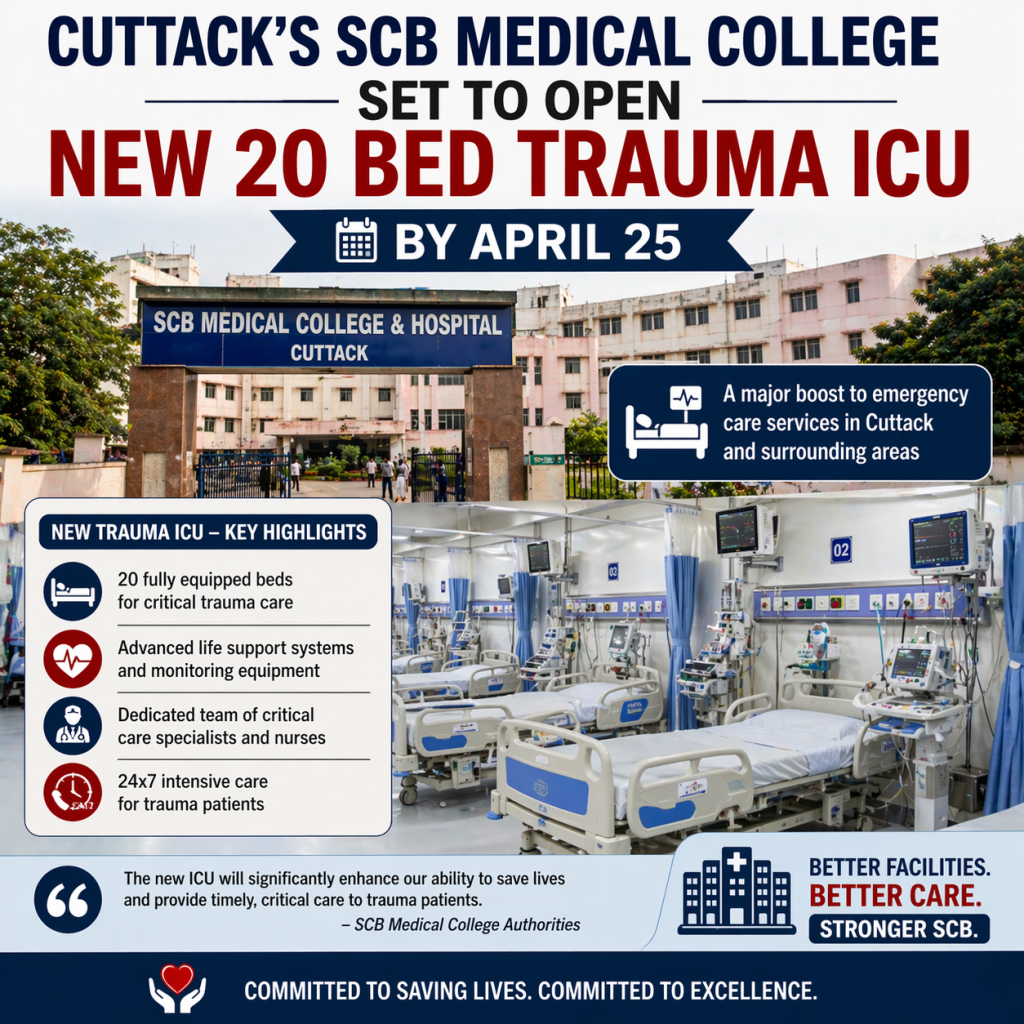
According to hospital officials, a new 20 bed trauma intensive care unit (ICU) in the Department of Surgery is expected to become fully operational by April 25, 2026. This interim facility is being set up on the ground floor after civil, electrical and related works were completed by the Roads & Building Division, General Electricity Department and WATCO. Medical equipment including monitors, ventilators, suction machines and oxygen lines has been arranged through the Odisha State Medical Corporation (OSMC). Final step is obtaining the fire safety certificate before patients can be shifted in.
This development comes at an important time for public health in Odisha. Let’s break down what it means, why it’s needed and how it could make a real difference for patients and their families.
Recent Context: Restoring Critical Services
In mid March 2026, fire broke out in the existing trauma care ICU at the hospital, tragically resulting in the loss of several patients and damaging the unit beyond immediate use. A judicial inquiry is underway and the original facility remains closed for now. In response, Orissa High Court directed that restoration of trauma services should not be delayed by the probe. Hospital authorities are following through with this interim 20 bed unit while long-term repairs to the main trauma centre continue, expected to take around two months once the inquiry concludes. Patients needing trauma care are currently being managed in the orthopaedic and neurosurgery ICUs. New dedicated space will help ease that pressure and bring back focused, round the clock critical care closer to where it’s most needed.
A Look at SCB Medical College and Hospital
Srirama Chandra Bhanja Medical College and Hospital commonly called SCB has been a cornerstone of healthcare in Odisha since 1944. What started as a small dispensary under Maratha rule evolved into one of the state’s largest government medical institutions. Today, it spans a large campus in Cuttack and serves as a major referral centre for complex cases from across the state and beyond. With thousands of beds and a reputation for training generations of doctors, SCB handles a huge daily footfall of outpatients and emergency cases. It offers everything from routine care to super specialty services, often free or highly subsidised for those who need it most. This new trauma ICU fits into SCB’s long standing role as a lifeline for serious medical emergencies.
Why Trauma Care Matters More Than Ever in Odisha
Odisha sees a heavy burden of road traffic injuries. Official data shows the state has recorded higher than average fatality rates from accidents compared to many parts of the country sometimes as high as 48 deaths per 100 accidents in recent years. Young adults especially men in their productive years, are most affected. Factors like long highways (including NH-16), heavy vehicle movement and sometimes challenging weather conditions play a part.
Trauma isn’t just about broken bones. It can involve severe head injuries, internal bleeding, chest trauma or multiple fractures all of which require immediate intensive monitoring to prevent complications like organ failure or infections. That’s where a dedicated trauma ICU makes a difference. Studies on trauma care show that specialised units with trained teams can significantly improve survival rates especially in the critical “golden hour” right after an injury.
For someone living in rural areas or smaller towns, SCB often becomes the go to hospital when local facilities can’t handle the severity. Having more trauma beds available means faster stabilisation, better coordination between surgeons, intensivists, nurses, and support staff and ultimately, more chances for patients to recover and return to their families.
What the New 20 Bed Trauma ICU Will Offer
This unit won’t be just another set of beds. Designed specifically for trauma cases, it will include:
- Advanced monitoring equipment to track vital signs continuously.
- Mechanical ventilators for patients who can’t breathe on their own.
- Facilities for emergency procedures right nearby in the surgery department.
- A multidisciplinary team approach trauma surgeons, critical care doctors, anaesthetists, physiotherapists and nutrition experts working together.
The ground floor location is practical too: it allows quicker access for ambulances and reduces risks during any future emergencies. Officials have emphasised that all installations are being done with fire safety in mind, learning from past incidents.
In real terms, this could mean the difference between life and death for a construction worker who falls from height, a child injured in a road mishap, or a farmer hurt in a machinery accident. Instead of being spread across other ICUs, trauma patients will receive targeted care in one place.
Practical Insights: Golden Hour and Everyday Prevention
The “golden hour” is a simple but powerful concept in trauma care. It refers to the first 60 minutes after a serious injury, when prompt treatment can dramatically improve outcomes sometimes saving up to 70% of lives that might otherwise be lost.
Here’s what that looks like in practice:
- Quick transport by equipped ambulance (many districts now have 108 services).
- Immediate assessment and stabilisation in the emergency department.
- Transfer to the trauma ICU for ongoing support.
While the hospital side is ramping up, individuals can play a role too. Simple habits reduce the chances of ending up in such a unit:
- Always wear a helmet on two-wheelers and seatbelts in cars.
- Avoid speeding or using mobile phones while driving.
- Maintain your vehicle regularly brakes, tyres and lights matter.
- In case of an accident, call for help immediately and don’t move the injured person unless absolutely necessary (to avoid worsening spinal injuries).
- Learn basic first aid: controlling bleeding with pressure, keeping the person warm, and monitoring breathing.
These small steps, combined with better hospital infrastructure, create a stronger safety net.
Looking Ahead: Broader Impact on Healthcare
This 20 bed addition is a practical response to an urgent need but it also signals continued investment in Odisha’s public health system. Government efforts to expand trauma care centres across the state have been ongoing, and SCB remains at the forefront as a Level-I facility. For families in Cuttack, Bhubaneswar and surrounding districts, it means one less worry when the worst happens. For medical students and resident doctors training at SCB, it provides hands on experience in high-acuity care skills they’ll carry into their future practice. Of course, challenges remain: staffing, maintenance, and long-term sustainability but restoring dedicated trauma services quickly shows a commitment to learning from difficult events and prioritising patient safety.
FAQ
1. When exactly will the new trauma ICU start functioning?
Hospital officials expect it to be operational by April 25, 2026 once the fire safety certificate is in place and equipment installation is complete.
2. What is a trauma ICU, and how is it different from a regular ICU?
A trauma ICU is a specialised intensive care unit equipped and staffed to handle patients with severe injuries from accidents, falls, or violence. It focuses on rapid stabilisation, advanced life support, and preventing secondary complications often with surgical teams close by.
3. Why was this new unit needed so urgently?
The previous trauma care ICU was damaged in a fire incident in March 2026. While repairs are planned, this interim facility ensures critical services aren’t interrupted, following directions from the Orissa High Court.
4. Who will benefit most from the new 20 bed unit?
Primarily patients from road accidents and other trauma cases across Odisha who need immediate intensive care. SCB serves as a major referral hospital so the impact will be felt statewide.
5. How can ordinary citizens help improve trauma outcomes?
Practice road safety daily, support local ambulance and emergency services, and spread awareness about the golden hour. Reporting unsafe road conditions to authorities also makes a difference.
Final Thoughts
The upcoming launch of the 20 bed trauma ICU at SCB Medical College Hospital is more than just another hospital upgrade,it’s a concrete step toward saving lives when minutes count. In a state where road accidents continue to take a heavy toll, having reliable, specialised critical care close at hand brings reassurance to patients, doctors and communities alike.
As this facility comes online in the coming days, it’s worth reflecting on our shared responsibility. Hospitals can only do so much; safer roads, quicker response systems, and informed citizens complete the picture. If you or someone you know ever faces a medical emergency, remember that timely action and the right care can change everything.
Stay safe, drive responsibly and keep an eye on updates from trusted health sources. Progress like this reminds us that even after tough setbacks, dedicated efforts can move healthcare forward one bed, one patient, one life at a time.
Disclaimer
This post is for informational and educational purposes only. It does not constitute medical advice, legal opinion or an official investigation. Readers should consult qualified healthcare professionals for personal health concerns. All details are drawn from media reports and outcomes of any official inquiry may provide further clarity.
Note: This article is based on publicly available information from hospital announcements and official reports as of April 23, 2026.
Link: According to reports from The New Indian Express
https://www.newindianexpress.com/amp/story/states/odisha/2026/Apr/20/20-bed-trauma-care-icu-to-open-in-surgery-dept-of-scb-medical-college-by-april-25