Why This Matters
In India road accidents, workplace injuries and sudden medical emergencies are major causes of death and disability. This problem is even more serious in semi urban and rural areas where access to advanced medical care is limited. Regions like Mysuru and Chamarajanagar have highways, farming activities and tourist movement Because of this accidents and emergencies are quite common. In such cases quick medical attention can save lives. Unfortunately, delays in reaching well equipped hospitals often make situations worse. This initiative aims to reduce those delays and improve outcomes.
What Is Being Upgraded?
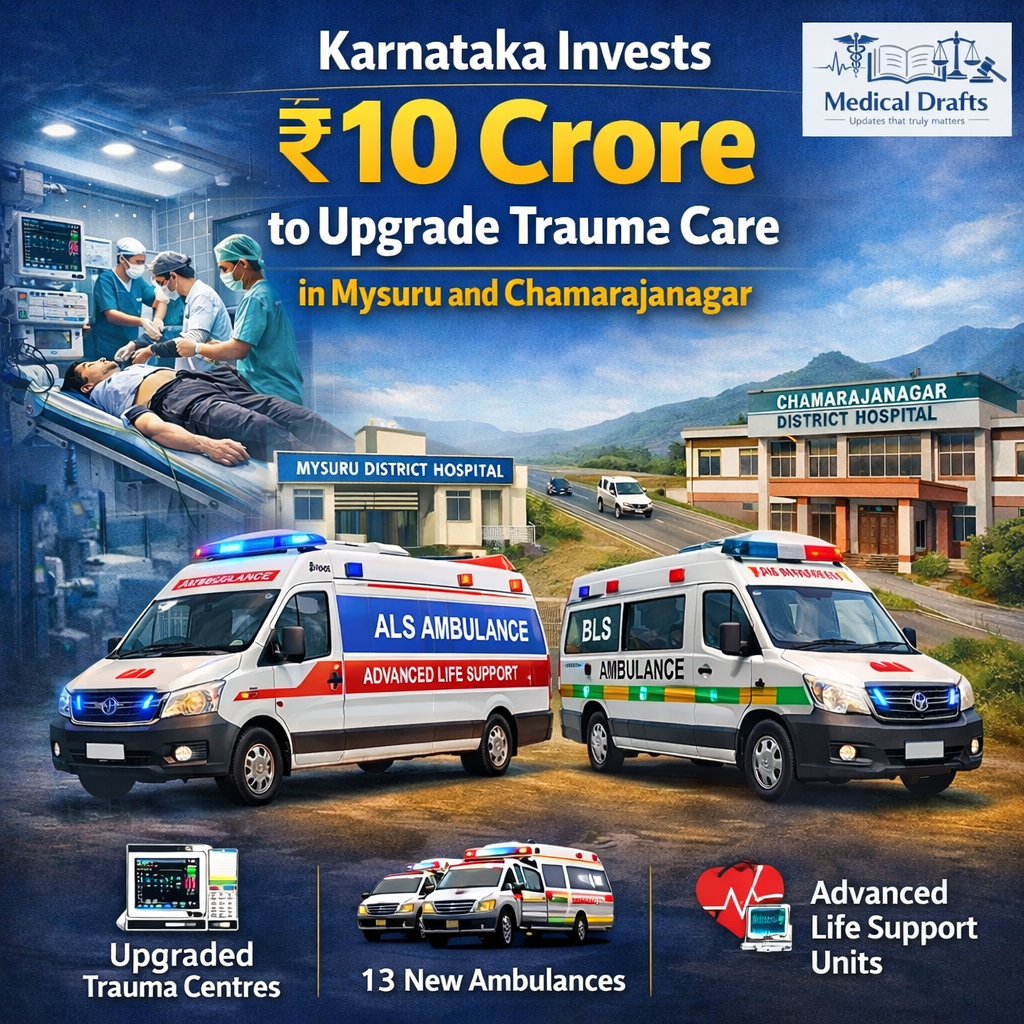
The project will cover a total of 11 hospitals, including:
District Hospitals
•Mysuru District Hospital
•Chamarajanagar District Hospital
In Mysuru district:
•Nanjangud
•Heggadadevanakote (H.D. Kote)
•Hunsur
•Periyapatna
•K.R. Nagar
In Chamarajanagar district:
•Kollegala
•Yelandur
•Gundlupet
These upgrades are part of the National Programme for Prevention and Management of Trauma and Burn Injuries.
Where Will the ₹10 Crore Be Used?
The budget will mainly focus on improving emergency care facilities. Key areas include:
•Medical equipment:New equipment will be provided for emergency rooms, operation theatres, and intensive care units.
•Ambulances:A total of 13 new ambulances will be added
•2 Advanced Life Support (ALS) ambulances (with ventilators and defibrillators for critical care)
•11 Basic Life Support (BLS) ambulances
These improvements will strengthen emergency response and reduce the burden on larger hospitals. Patients will be able to receive care closer to their homes.
A Step in the Right Direction
This initiative is part of a larger healthcare plan in the Karnataka Budget 2026–27. The state has allocated ₹45 crore for trauma care improvements across district and taluk hospitals.
The Mysuru Chamarajanagar project is a focused effort where the need is most urgent. It shows how targeted investment can make a real difference.
For local residents this means:
•Faster ambulance services
•Better equipped hospitals
•Less need to travel long distances for treatment
Final Thoughts
While ₹10 crore may not seem like a large amount in the overall healthcare budget, it can have a big impact when used wisely. Improving equipment and ambulance services in smaller hospitals can save many lives.It is encouraging to see the government taking action on long-standing healthcare needs.
Do you think other states should take similar steps to improve local trauma care? Or do we need bigger changes in the healthcare system first?