In the world of postgraduate medical training, a monthly stipend is not just pocket money it’s how young doctors cover rent, food, books, and the long hours that come with residency. So when reports surface that a college might be taking back a big chunk of that money through questionable means, it raises eyebrows across the medical community.
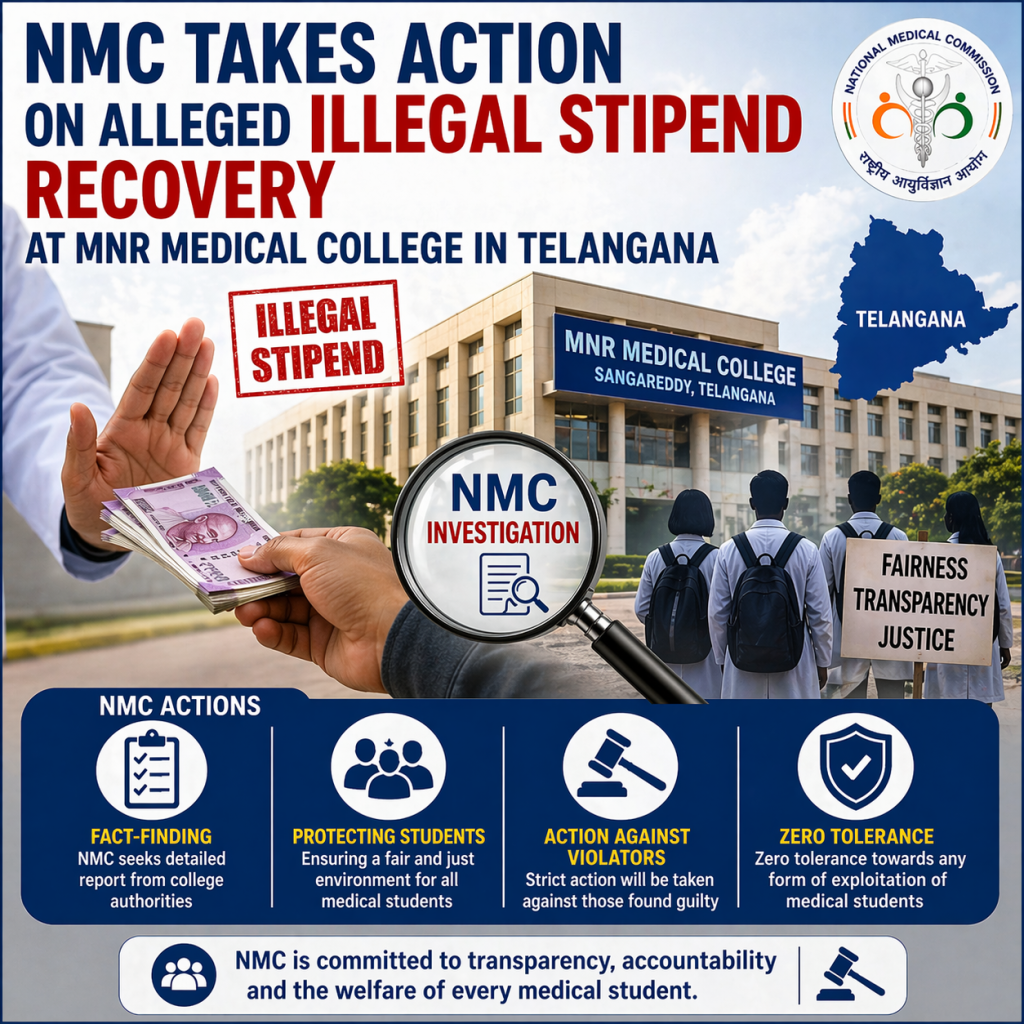
On 17 April 2026, the Postgraduate Medical Education Board (PGMEB) of the National Medical Commission (NMC) sent a formal notice to the Dean and Principal of MNR Medical College & Hospitalin Sangareddy, Telangana. College has been asked to explain allegations of illegal stipend recovery and coercive practices involving its postgraduate (PG) students. If the claims are found true, NMC has warned of penal action.
This isn’t just another regulatory notice. It shines a light on a bigger conversation about fairness, transparency, and student rights in private medical colleges across India.
What Are the Allegations Against MNR Medical College?
According to the notice some PG residents at the college claim they were made to open bank accounts in a specific bank chosen by the management. Stipend was credited to these accounts as required by law. However, students were then allegedly asked to withdraw a major portion of the money in cash and hand it over to the college authorities.
To strengthen this arrangement management reportedly collected five blank signed cheques from each student. These cheques students said were kept as leverage with the implicit threat that they could be encashed if anyone refused to cooperate. These practices if proven go against the spirit and letter of the rules meant to protect residents from financial exploitation during their training years.
How the National Medical Commission Responded
The NMC’s response has been prompt and firm. In its letter dated 17 April 2026, the PGMEB has given the college seven days to submit:
- A detailed point by point reply to the allegations
- Proof of actual stipend payments made to students
- Relevant bank statements
Commission has made it clear that any violation of the Postgraduate Medical Education Regulations (PGMER) 2023 will invite appropriate penal action. This could range from warnings and fines to more serious measures affecting the college’s recognition or permissions for future PG seats. For students and parents following the story, this shows the NMC is actively monitoring complaints and acting on them something many in the medical fraternity have been demanding for years.
Understanding PG Stipends: The Rules That Matter
Let’s step back for a moment and understand why stipends exist in the first place. During a three year PG course (MD, MS, DM, MCh, etc.) resident doctors work full time in hospitals often 12–16 hours a day, six or seven days a week. Stipend is compensation for this clinical work not charity. PGMER 2023 regulations are very clear: private medical colleges must pay PG students a stipend at par with what government medical colleges in the same state pay.
In Telangana government PG stipends were recently hiked by around 15%. First year residents now receive roughly ₹65,000–₹67,000 per month with slight increases in the second and third years. Colleges cannot deduct arbitrary amounts charge “management fees,” or recover money through back door methods.
Any recovery must follow proper payroll rules, with full documentation and tax compliance. Forcing cash returns or using signed blank cheques is simply not allowed.
Why This Issue Hits So Hard for Resident Doctors
Think about a typical PG student many come from middle class families. They’ve already spent lakhs on undergraduate education and NEET PG coaching. During residency, they often support younger siblings or aging parents while living in a new city. Losing even half their stipend can mean skipping meals, delaying rent or taking loans, all while handling life and death responsibilities in the hospital.
Beyond finances, coercive practices create fear. Students worry that complaining might affect their training, exams or future career. This stress can affect patient care and the overall learning environment. Stories from other private colleges in Telangana and neighbouring states show this isn’t always an isolated case. When one college faces scrutiny, it often encourages others to clean up their systems too.
Practical Advice for Postgraduate Students
If you’re a current PG resident or planning to join one soon, here are some straightforward, actionable steps you can take:
- Know your rights
Download the latest PGMER 2023 guidelines from the official NMC website. Keep a copy on your phone. - Keep records
Save every bank statement, salary slip, and email about stipend. Take screenshots of credit alerts. Never sign blank cheques or undated documents. - Check before joining
During counselling or interviews, politely ask about stipend amount, mode of payment and any deductions. Reputable colleges will answer transparently. - Use official channels
Most colleges have an internal grievance cell. Start there. If nothing happens within a reasonable time, file a complaint on the NMC’s online portal (nmc.org.in) or email the PGMEB directly. Anonymous options are available in many cases. - Talk to seniors
Connect with residents who passed out from the same college in the last two years. Their experiences can be eye opening. - Join resident doctor associations
Groups like the Indian Medical Association’s resident wing or state level forums often provide guidance and collective support.
Remember, documenting everything calmly and factually is your strongest protection.
Bigger Picture: NMC’s Push for Transparency
NMC has been steadily tightening rules on medical education quality, faculty norms and now financial transparency. Mandatory stipend disclosures, direct bank transfers and regular audits are becoming the norm. Cases like this one send a signal that the era of “don’t ask, don’t tell” about stipends is ending. For aspiring doctors this is ultimately good news. Better protected residents mean better trained doctors and safer hospitals for patients.
FAQ
1. Is it legal for private medical colleges to recover part of the stipend in cash?
No, PGMER 2023 requires full, transparent payment at par with government colleges. Any deduction or recovery must follow legal payroll procedures and be properly documented. Forced cash returns are not permitted.
2. What is the current stipend amount in Telangana government medical colleges?
After the recent 15% hike, first-year PG residents receive approximately ₹65,000–₹67,000 per month. Amounts increase slightly in subsequent years.
3. What can happen to a college if the allegations are proven?
The NMC can impose fines, reduce PG seats, or take other penal measures depending on the severity of the violation. In extreme cases recognition for certain courses can be affected.
4. How can a student safely report stipend issues?
Start with the college grievance cell, then escalate to the NMC PGMEB portal. Keep all evidence (bank statements, messages, etc.) and avoid direct confrontation if you feel unsafe.
5. Does this affect only MNR Medical College?
No. While this notice is specific to MNR, the NMC has been reviewing similar complaints from other private institutions. Case highlights a wider issue that the commission is addressing across the country.
Final Thoughts
Notice to MNR Medical College is more than a regulatory slap on the wrist,it’s a reminder that medical education must serve both patients and the doctors who treat them. Postgraduate training is tough enough without added financial and emotional pressure.
If you’re a medical student or resident take a moment today to check your own stipend arrangements. Know the rules. Keep records. Speak up through the right channels when something feels wrong and for parents and aspiring doctors choosing colleges look beyond rankings and fees. Ask the hard questions about stipend policy and student welfare.
NMC’s action shows that change is happening. By staying informed and holding institutions accountable, the next generation of doctors can focus on what really matters: becoming skilled, compassionate physicians without worrying about whether their next meal is paid for. Your training years shape the doctor you become. Make sure they’re fair.
Stay safe, stay informed and keep learning, medical community and your future patients will thank you for it.
Disclaimer
This post is for informational and educational purposes only. It does not constitute medical advice, legal opinion or an official investigation. Readers should consult qualified healthcare professionals for personal health concerns. All details are drawn from media reports and outcomes of any official inquiry may provide further clarity.
Link: According to media reports from The Hindu
https://www.thehindu.com/news/national/telangana/nmc-flags-alleged-stipend-recovery-coercion-at-mnr-medical-college-in-sangareddy/article70892706.ece/amp/