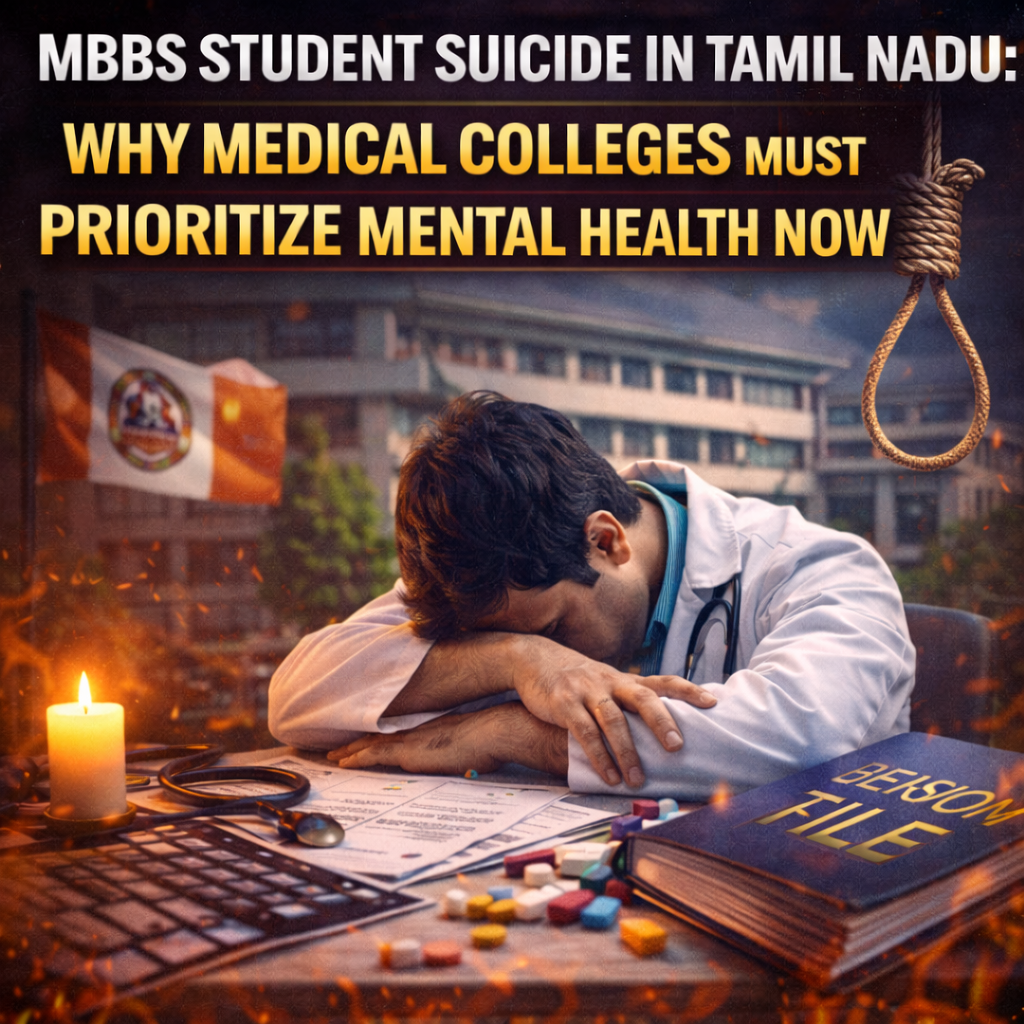
According to police reports and initial investigations, incident is being treated as a suspected case of suicide linked to alleged harassment and bullying by a group of fellow students involving a fake social media account. This heartbreaking event is not an isolated tragedy. It has once again spotlighted the intense mental health challenges faced by medical students across India. At a time when we celebrate doctors as healers, we must also ensure they receive the care and support they need during their own training years.
Why MBBS Students Are at Higher Risk for Mental Health Issues
Pursuing an MBBS degree in India is one of the most demanding academic journeys. Students face:
- Extreme academic pressure: Long study hours, frequent exams, and the constant fear of failing or not ranking high enough for postgraduate seats.
- Hostel life challenges: Being away from family for the first time, often in high pressure environments where ragging or peer conflicts can escalate.
- Emotional isolation: Many students hesitate to speak about stress, anxiety, or depression due to stigma or fear of being seen as “weak.”
- Future uncertainty: The competition for NEET-PG, clinical rotations and financial burdens on middle-class families add layers of anxiety.
Studies and surveys conducted by medical bodies in recent years show alarming trends: nearly 40-50% of medical students report symptoms of depression or anxiety, with burnout rates even higher during clinical years. The National Medical Commission (NMC) has acknowledged this issue and introduced guidelines encouraging colleges to set up mental health cells but implementation remains uneven.
The recent case in Tamil Nadu is a painful reminder that when support systems fail, the consequences can be devastating.
Recognizing the Warning Signs
Parents, teachers and friends must stay vigilant. Common red flags among medical students include:
- Sudden withdrawal from social activities or classes
- Drop in academic performance despite earlier consistency
- Changes in sleep or eating patterns
- Frequent expressions of hopelessness or worthlessness
- Increased irritability or unexplained anger
If you notice these signs in yourself or someone you know, reaching out early can make all the difference.
Steps Forward: What Medical Colleges, Students and Families Can Do
For Colleges and Administrators
The NMC has already directed institutions to prioritize student well being. Practical steps include:
- Mandatory mental health orientation programs for freshers
- Anonymous counseling services with professional psychologists on campus
- Strict anti-ragging and anti-bullying policies with swift action
- Regular stress-management workshops and peer support groups
For Students
You are not alone. It is okay to ask for help. Simple daily practices like short meditation breaks, exercise, and maintaining connections with family can help. Many colleges now have dedicated helplines use them without hesitation.
For Parents
Stay connected even from a distance. Create a safe space where your child feels comfortable sharing difficulties without judgment. Encourage open conversations about mental health as early as school days.
A Collective Responsibility
The death of Asher Immanuel should not be remembered only as a news headline. It must become a turning point for every medical college in India to treat student mental health with the same seriousness as academic excellence. Medical students enter the profession to save lives. The least we can do is ensure their own lives are protected and nurtured during their formative years.
If you are a medical student, parent, doctor or educator reading this, I urge you to start a conversation today in your college, your family or your circle. Small actions like checking in on a friend, advocating for better counseling facilities or simply sharing this post can help prevent another tragedy.
What are your thoughts on mental health support in medical colleges? Have you or someone you know faced similar pressures? Share your experiences respectfully in the comments below. Together, we can push for meaningful change.
This post is written with deep respect for the family of the deceased and aims to raise awareness rather than sensationalize the event. If you need professional help, please use the helplines listed above immediately.