Imagine this: Your toddler wakes up with loose motions and vomiting. It’s 2 a.m., you’re worried sick and the nearest pharmacy is your only option right now. You grab what looks like the familiar “ORS” bottle you’ve seen recommended everywhere but what if that bottle isn’t the medically approved Oral Rehydration Solution at all?
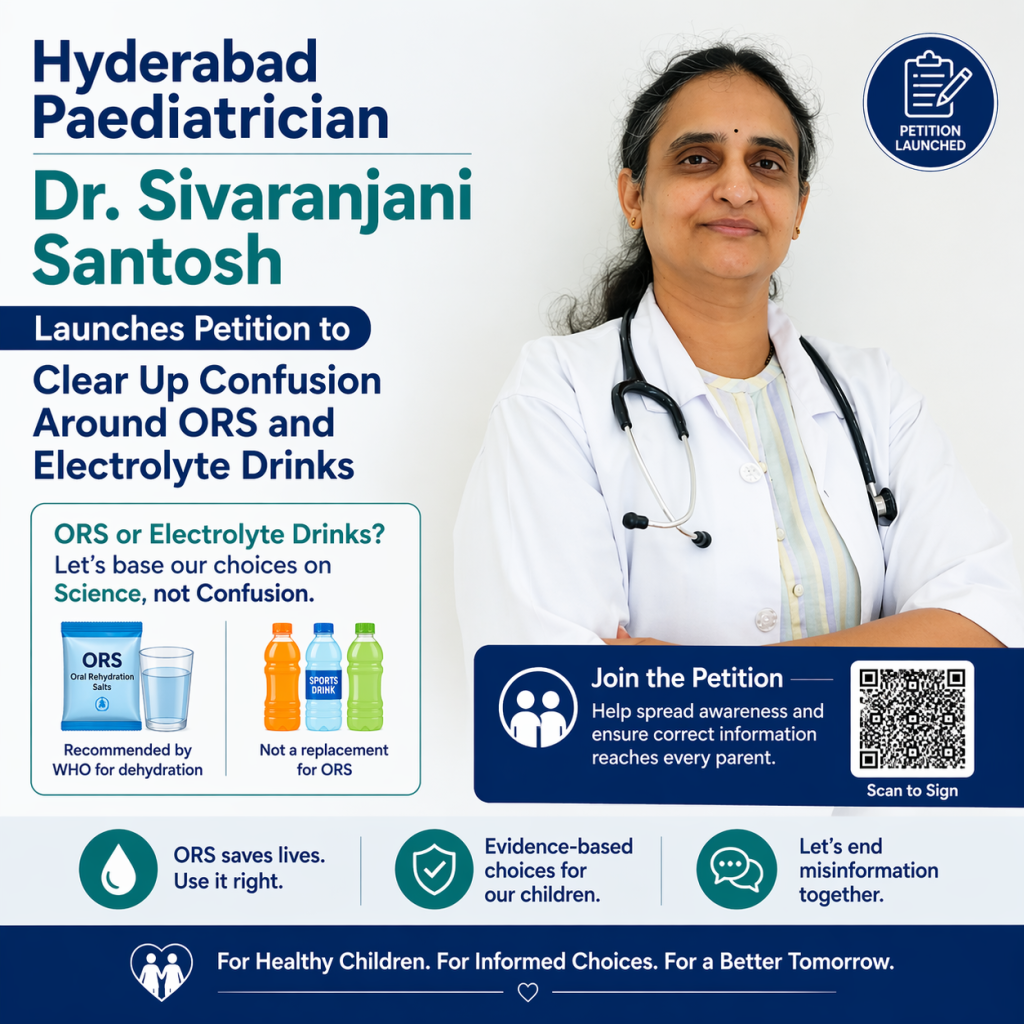
This exact scenario is what prompted Dr. Sivaranjani Santosh, a senior paediatrician from Hyderabad, to take her long standing advocacy one step further. On April 22, 2026 just days after resigning from the Indian Academy of Paediatrics, she started an online petition on https://c.org/Rv6wWTWxR6 titled Clear Communication for Electrolyte Drinks: Protect Consumers in Pharmacies. As of now thousands of people have already signed it.
Dr. Santosh isn’t calling for a ban on commercial drinks. She’s asking for something simpler and more practical: clearer labels, better separation on pharmacy shelves and rules that stop everyday hydration products from looking and sounding too much like life saving medical ORS. It’s a story about public health, consumer rights and the quiet power of one doctor who has been fighting this battle for eight years.
What Exactly Is ORS and Why Does the Distinction Matter?
Let’s start with the basics, because most of us only learn about this stuff when we really need it.
Oral Rehydration Solution (ORS)is a specific formula recommended by the World Health Organization (WHO) and every major paediatric body in India. It contains precise amounts of salts, glucose and electrolytes designed to safely replace fluids lost during diarrhoea, vomiting or heat related dehydration. The low osmolar version most commonly used in India is proven to reduce the need for hospitalisation and even save lives in severe cases.
Commercial electrolyte drinks often sold under names like ORSL or its newer version eRZL are different. They’re marketed primarily as everyday hydration or sports style drinks. Many contain higher amounts of sugar (or artificial sweeteners like sucralose), different electrolyte balances, and are not formulated to the same medical standards as ORS sachets or liquids. They can be perfectly fine for a healthy adult feeling a bit tired after a long day but in a sick child with ongoing diarrhoea, extra sugar can sometimes make symptoms worse by drawing more water into the gut.
The problem isn’t that these drinks exist. The problem is how they’re presented in pharmacies right next to the real ORS packets, with similar looking packaging and names that echo the medical term. Parents under stress don’t have time to read the fine print. They reach for what feels familiar.
Dr. Sivaranjani Santosh: Eight Years of Quiet Persistence
Dr. Santosh has been raising this issue since around 2018. She has seen case after case in her clinic where parents brought in children whose diarrhoea had worsened after using the wrong product. Instead of pointing fingers at any single company, she focused on the system: misleading shelf placement and brand recall.
Her sustained advocacy including public interest litigations and consistent engagement with regulators played a key role in a major win. In October 2025, the Food Safety and Standards Authority of India (FSSAI) issued clear guidelines: only products that exactly match the WHO ORS formula can use the term “ORS” on their labels. Non compliant beverages had to stop using it.
Many companies complied but Dr. Santosh noticed that one popular brand rebranded its non ORS product from ORSL to eRZL while keeping enough visual and name similarity that the old association lingered in parents’ minds. That’s when she decided the fight wasn’t over.
A few weeks ago, she received a legal notice from the companies involved. Rather than back down, she resigned from the Indian Academy of Paediatrics, stating that the professional body had not offered adequate support on this public health matter. Her resignation made headlines and sparked wider discussion among doctors.
Now through the petition, she is turning to the public directly.
What the Petition Is Actually Asking For
The petition is measured and solution-focused. It does not demand that companies stop selling their products. Instead, Dr. Santosh and the signatories want:
- A complete rebranding of products like eRZL so there is no lingering association with ORSL or the medical term ORS.
- Stronger enforcement so pharmacies don’t place commercial drinks in the same section or display as medical ORS.
- Clear, prominent labelling that tells consumers exactly what they are buying hydration beverage versus medical rehydration solution.
- Protection for doctors and health professionals who raise evidence based concerns without facing legal pressure that could discourage future advocacy.
In her own words shared on social media and in the petition, “The issue is not about whether [the drink] is safe in isolation but about how it is presented, perceived, and potentially misunderstood in real world settings.”
Real Life Scenarios: How Confusion Happens in Seconds
Picture a busy mother in a Hyderabad pharmacy at closing time. Her child has had five loose stools since morning. The pharmacist points to a brightly packaged bottle on the shelf marked with familiar letters. No time to Google ingredients or compare osmolarity. She buys it, goes home and gives it hoping it will help.
Or consider the father whose elderly parent is dehydrated after a bout of gastroenteritis. He grabs the first “ORS like” liquid he sees because the name rings a bell from previous doctor visits.
These aren’t hypothetical stories. Paediatricians across India hear versions of them regularly. The petition highlights that in moments of stress, our brains default to brand familiarity and visual cues. That’s exactly why clear communication isn’t a luxury it’s a safety measure.
Practical Tips for Parents: How to Choose the Right Product Every Time
Here’s the good news: you don’t need a medical degree to make better choices. A few simple habits can protect your family.
- Look for the exact words “WHO-recommended ORS” or “Oral Rehydration Salts Low Osmolar Formula”on the packet. Genuine medical ORS usually comes in sachets that you mix with water, not ready to drink bottles meant for general use.
- Check the ingredients list.Real ORS has a specific ratio of sodium, potassium, chloride, citrate and glucose. Higher sugar content or added flavours often signals a commercial hydration drink.
- Ask the pharmacist clearly:“Is this the WHO ORS formula or a commercial electrolyte drink?” A good pharmacist will explain the difference without hesitation.
- Keep a few genuine ORS sachets at homein your medicine cabinet. They’re inexpensive, have a long shelf life, and can be lifesavers during sudden illness.
- When in doubt, call your paediatricianor use a teleconsultation app. Better one quick question than the wrong product.
These small steps remove guesswork and put control back in parents’ hands.
Why This Conversation Matters Beyond One Brand
This isn’t just about one company or one product. It’s about the larger principle that health communication should empower people, not confuse them. When regulations lag behind clever marketing, ordinary families pay the price sometimes with prolonged illness or unnecessary hospital visits. Dr. Santosh’s petition also shines a light on something bigger: the need to protect healthcare professionals who speak up. If doctors fear legal notices every time they flag a public health gap, fewer voices will speak, and patients ultimately lose.
FAQ: Your Quick Questions Answered
Q1: Are commercial electrolyte drinks unsafe?
No. They are generally safe for healthy people needing quick hydration. The concern is using them instead ofproper medical ORS during actual dehydration from illness, especially in young children.
Q2: Has FSSAI already banned misleading ORS branding?
Yes in October 2025, FSSAI prohibited non-compliant drinks from using the term “ORS.” The current petition focuses on rebranding and pharmacy practices that still create confusion despite the new rules.
Q3: What can I do right now?
Sign the petition on Change.org if you support clearer labelling. More importantly, share this knowledge with friends and family, and always double check products before buying.
Q4: Where can I find genuine ORS?
Most government hospitals, Jan Aushadhi stores and reputable pharmacies stock WHO approved ORS sachets. Look for brands clearly labelled as medical rehydration solutions.
Q5: Has the petition gained traction?
Yes thousands of signatures in the first few days, plus support from doctors, parents and health conscious citizens across India.
Time for Clearer Choices
Dr. Sivaranjani Santosh has spent nearly a decade turning clinic observations into regulatory change. Her latest petition is a reminder that public health improves when we all pay attention to the small details like a bottle’s label or a shelf’s arrangement.
Whether you sign the petition or not, the real power lies in becoming a more informed buyer. Next time you’re in that pharmacy aisle with a sick child at home, pause for five seconds and ask the right question. Those five seconds could make all the difference. Clear communication saves lives. Informed parents protect their children and when doctors, regulators and citizens work together, system actually gets better.
What do you think should pharmacies be required to separate medical ORS from general hydration drinks? Drop your thoughts below, and consider adding your voice to the petition if this issue resonates with you. Your family’s next pharmacy run might depend on it.
Disclaimer
This post is for informational and educational purposes only. It does not constitute medical advice, legal opinion or an official investigation. Readers should consult qualified healthcare professionals for personal health concerns. All details are drawn from media reports and outcomes of any official inquiry may provide further clarity.
Link:According to media reports from The
Times Of India
https://timesofindia.indiatimes.com/city/hyderabad/hyderabad-paediatrician-launches-petition-over-misleading-electrolyte-drink-branding/amp_articleshow/130444237.cms