On April 11, 2026 this move is being hailed as a game changer for local students struggling to secure affordable medical seats and for residents who often face high out of pocket expenses for quality treatment. With Gurugram rapidly emerging as a healthcare hub, this policy ensures that Haryana’s own people get a fair share of the benefits from the new state of the art facility.
Background: The New Medical College Taking Shape in Gurugram
The Shri Sheetla Mata Devi Medical College and Hospital is currently under construction on a sprawling 30.75 acre campus in Sector 102A Kherki Majra, Gurugram. Once operational, it will feature:
- 150 MBBS seats for undergraduate medical education
- 850 hospital beds for comprehensive patient care
Developed by the Gurugram Metropolitan Development Authority (GMDA), project is designed as a modern medical institution that will not only train the next generation of doctors but also provide advanced healthcare services to the growing population of Gurugram and surrounding areas.
Gurugram often called the Millennium City already attracts patients from across North India for specialized treatment. However, many Haryana residents have long felt that premium facilities in their backyard were out of reach due to high competition from out of state students and patients. CM Saini’s directive directly addresses this concern.
Key Details of the 33% Reservation Policy
According to the official announcement:
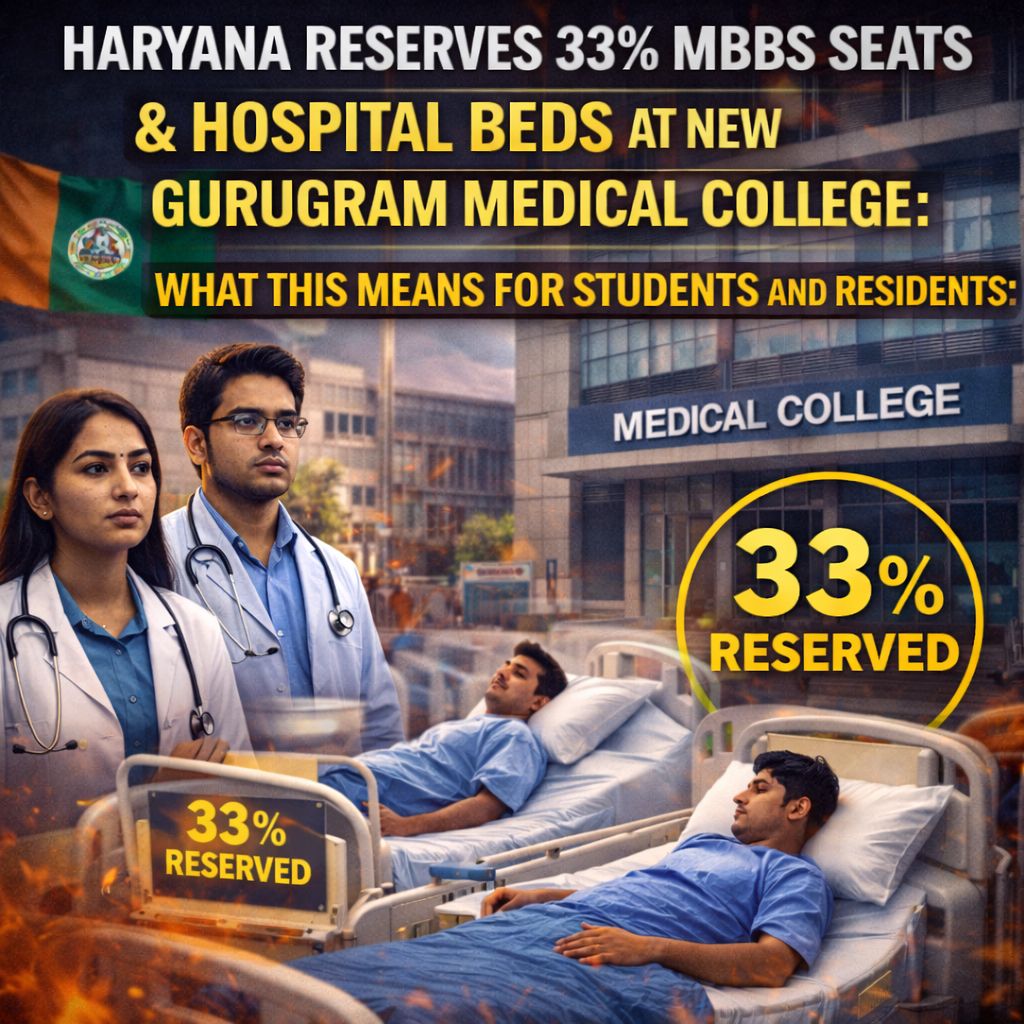
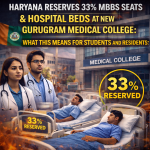
- 33% of the 150 MBBS seats (approximately 50 seats) will be reserved for students from Haryana.
- 33% of the 850 hospital beds (roughly 280 beds) will be earmarked for Haryana residents.
The Chief Minister has also instructed that:
- Fees for the reserved MBBS seats will be fixed at par with other government medical colleges in the state, making quality medical education genuinely affordable.
- Hospital beds under the reservation will be linked to the Ayushman Bharat scheme, ensuring that weaker sections of society can access treatment with minimal or no cost.
This isn’t just a numbers game it’s a clear policy signal that the Haryana government wants to prioritize local talent and local health needs in a facility that’s being built with public resources.
Why This Matters: Addressing Long Standing Challenges
Haryana has made impressive strides in expanding medical infrastructure in recent years, but challenges remain:
- Intense competition for limited MBBS seats often leaves meritorious Haryana students behind.
- Many families are forced to pay exorbitant fees at private colleges or travel outside the state.
- In healthcare, residents sometimes find that new super-specialty hospitals cater more to medical tourism than to local needs.
By reserving one third of seats and beds, the government is sending a strong message: development must benefit locals first. This policy is expected to:
- Boost local enrollment in medical courses
- Reduce financial burden on Haryana families
- Strengthen the state’s doctor-patient ratio in the long run
- Promote inclusive healthcare through Ayushman Bharat integration
Experts believe this could also encourage more Haryana students to return and serve in the state after completing their education, helping curb the brain drain that has affected many regions.
Broader Impact on Haryana’s Healthcare Vision
This reservation fits perfectly into Haryana’s larger goal of strengthening medical education and public health. State is actively working to increase the total number of MBBS seats and modernize existing facilities. New Gurugram college will be one of the most advanced in the NCR region, complete with cutting edge infrastructure, experienced faculty, and a focus on both clinical training and research.
For patients, the reserved beds mean faster access to quality care whether it’s general medicine, surgery or specialized treatments without the long waiting times or high costs often seen in private setups.
Gurugram’s location on the Delhi border makes this even more strategic. While the city benefits from proximity to the national capital, the reservation ensures that Haryana doesn’t lose out on the advantages of having a top tier medical college in its territory.
What Students and Parents Should Know
If you’re a Haryana resident preparing for NEET or planning medical education:
- Keep an eye on the official admission notifications once the college starts its intake process.
- The reserved seats will follow state domicile rules, so make sure your documents are in order.
- Affordable fees aligned with government colleges could make this one of the most sought-after options in North India.
For patients and families, the Ayushman Bharat linkage is a big relief especially for chronic illnesses or major procedures where costs can quickly spiral.
A Positive Step Forward
CM Nayab Singh Saini’s directive is more than just a policy announcement it’s a commitment to equitable growth. In an era where premium infrastructure often benefits only a few, prioritizing 33% for locals sets a balanced and forward thinking example.As the Shri Sheetla Mata Devi Medical College and Hospital nears completion, Haryana residents have every reason to feel optimistic. This isn’t just about seats and beds it’s about building a healthier, more educated and more self reliant state.
What do you think about this reservation policy? Is it a fair step for local empowerment, or should medical seats remain fully merit-based? Drop your thoughts in the comments below!
Stay tuned for more updates on Haryana’s education and healthcare developments. If you found this helpful, share it with students and families who might benefit from this opportunity.